Why Your Website Footer Matters More Than You Think
Learn about why your website footer matters more than you think and how it impacts your business website. Practical insights from FunnelDonkey, St. George Ut...
The Unsung Hero: Why Your Website Footer Isn't Just for Legalese Anymore
Let's be honest. When you're dreaming up your next website, where does the footer usually land on your priority list? Probably somewhere between choosing the perfect shade of off-white and debating the Oxford comma.
Most designers treat it like an afterthought. A digital junk drawer for "other stuff" nobody really needs to see. Legal disclaimers, a tiny copyright notices, a link to the privacy policy hidden in plain sight. Snooze fest.
But what if we told you that little strip at the bottom of every page is actually a covert operations center for user experience, SEO, and even conversions? What if it's the quiet workhorse, dutifully guiding visitors, reinforcing your brand, and subtly nudging them down your funnel?
That's right. The humble website footer, often overlooked and underutilized, is a powerful tool. And if you're treating it like merely a space to dump your terms and conditions, you're missing out on a significant opportunity to connect, convert, and cement your authority.
Beyond the Boilerplate: The Strategic Power of a Well-Designed Footer
Forget the dusty, monochrome footers of yesteryear. Today's smart businesses leverage this prime real estate. They know it's not just about what you have to put there, but what you can put there to enhance the user journey.
Think about it: every visitor, no matter how they land on your site, eventually scrolls. And where do they often end up when they've reached the end of a page and haven't found exactly what they're looking for? The footer. It's the last stop before they bounce. Make it count.
The footer is not just an endpoint; it's a strategically placed launchpad for deeper engagement.
We're talking about a space that, when optimized, can:
- Improve site navigation: A well-structured footer offers a "last chance" navigation system.
- Enhance SEO: Strategic links and local signals can boost your visibility.
- Build trust & credibility: Essential legal info and contact details instill confidence.
- Drive conversions: Clear calls to action (CTAs) can capture leads.
- Strengthen brand identity: Consistency in design and messaging reinforces who you are.
- Provide crucial information: Beyond navigation, it's where people expect to find key details.
Ready to turn your forgotten footer into a functional powerhouse? Let's dive into exactly what needs to be there, what should be there, and what strategic bells and whistles can transform it from an afterthought into an asset.
Footer Essentials: The Non-Negotiables
No matter your business, some elements are simply mandatory. These are your foundational pieces, the anchors that prevent your site from floating off into the digital ether. Disregard them at your peril.
1. Copyright Information
This is standard. It protects your content, especially if you're publishing original work. Keep it simple and up-to-date.
© [Current Year] [Your Company Name]. All Rights Reserved.
2. Privacy Policy & Terms of Service
In our data-driven world, these aren't just suggestions; they're legal requirements, especially if you collect any user data (like through a contact form, analytics, or cookies). Be transparent. Provide direct links.
If you're a FunnelDonkey client in St. George, Utah, for instance, your web design would ensure these are correctly implemented and linked.
3. Contact Information (or Link)
Don't make people hunt. If a user has scrolled to the bottom, they might be looking for a way to get in touch. A physical address (if applicable), phone number, and an email address are ideal. At the very least, a clear link to your Contact Us page is crucial.
4. Basic Navigation
While your main navigation serves the top of the site, the footer offers a secondary, often more concise, navigation set. This is particularly useful for users who have scrolled a long page and want to jump to another key section without going back to the top. Think about your core services, About Us, Blog, or Careers.
5. Accessibility Statement (if applicable)
For many businesses, particularly those serving large publics or government entities, an accessibility statement is becoming a legal necessity. It demonstrates your commitment to ensuring your website is usable by everyone, regardless of ability.
The Strategic Footer: Going Beyond Basics
Now that we've covered the must-haves, let's talk about the game-changers. These are the elements that elevate your footer from functional to fantastic, turning it into a proactive tool for your business goals.
1. Local SEO Signals
If your business relies on local customers, your footer is prime real estate for local SEO. Include your:
- Full Business Name (NAP): Name, Address, Phone number. Ensure this is consistent with your Google My Business profile and other citations.
- Service Area Cities: Don't keyword stuff, but subtly listing cities you serve can be incredibly powerful. For example, if you offer SEO services in Southern Utah, you might mention St. George, Cedar City, and Hurricane.
- Map Embed: A small Google Map embed can visually anchor your location.
This helps search engines understand your geographical relevance, which is crucial for ranking in "near me" searches. If you're building a business in Cedar City, linking to your SEO Cedar City page from the footer of relevant pages solidifies your geographic intent.
2. Social Media Links
It's tempting to plaster social icons all over your header, but realistically, most users clicking those links are doing it at the end of their journey, either to check your legitimacy or to follow up after they've absorbed your content. The footer is the perfect, unobtrusive spot for them.
Ensure these open in new tabs so users don't leave your site entirely.
3. Trust Signals & Testimonials
What vouches for your credibility? Industry awards, certifications, prominent client logos, or even a rotating micro-testimonial can be persuasive. Seeing these at the bottom reinforces your professionalism and trustworthiness just before a user might navigate away or convert.
Think about sites like e-commerce stores showing payment icons – it's all about building confidence.
4. Secondary CTAs & Lead Magnets
Not every visitor is ready to buy or book a demo. But they might be willing to sign up for your newsletter, download an ebook, or check out your latest blog posts. The footer is a fantastic place for low-commitment CTAs.
- "Join Our Newsletter"
- "Download Our Free Guide"
- "Read Our Latest Articles" (linking to your blog)
- "Calculate Your ROI" (like this)
This keeps them engaged and moves them deeper into your funnel, even if they aren't ready for the "big ask" yet. For adventure businesses in the Zion area, a footer CTA like "Plan Your Adventure in Zion" could link directly to a booking page, echoing strategies for marketing adventure businesses.
5. Internal Linking Powerhouse
Search engines love a logical, well-linked website. Your footer is a quiet workhorse for internal linking. Use it to point to important, but perhaps less frequently accessed, pages that support your SEO efforts and user experience.
- Key Service Pages: Directly link to services like Web Design or Local SEO.
- Case Studies/Portfolio: Show off your work.
- FAQ Page: Answer common questions.
- Blog Categories: Help users find content relevant to their interests.
This not only helps users navigate but also distributes "link juice" throughout your site, signaling to search engines the importance of these linked pages.
6. Accreditations & Certifications
If you have industry accreditations, partnerships, or security certifications (like SSL or trust badges), the footer is a great place to display them. They subtly reassure visitors about your legitimacy and security.
7. Recent Blog Posts or Popular Articles
Keep users on your site longer by offering a small, dynamic section showcasing your newest or most popular content. This lowers bounce rates and increases engagement. If you've just published a post on converting clicks to calendar bookings, linking it here can catch the eye of a relevant visitor.
What NOT to Put in Your Footer (And Why)
Just as important as knowing what to include is knowing what to exclude. A cluttered, overwhelming footer defeats its purpose.
1. Excessive Links
More isn't always merrier. A "link farm" footer looks spammy and dilutes the value of each link. Prioritize. If a page isn't crucial for navigation or SEO, don't include it.
2. Repeat Main Navigation
Unless your site is exceptionally large or complex, don't just replicate your entire main navigation. The footer nav should be a curated selection of key links that serve a different purpose (e.g., legal, support, company info).
3. Animated Gifs or Flash Elements
These are dated, distracting, and detrimental to site performance. Keep your footer clean, fast, and professional.
4. Huge Banners or Ads
Your footer is not an auxiliary billboard. Keep graphics subtle and only include elements that truly belong there, like your logo.
5. Irrelevant Information
Every element should serve a purpose. If it doesn't aid navigation, build trust, provide essential info, or boost SEO, it doesn't belong.
Think of it this way: your footer is like the clean-up crew after a main event. They should be efficient, organized, and helpful, not host a second party.
Design Dynamics: Making Your Footer Shine
A brilliantly structured footer can still fall flat if it's poorly designed. Aesthetics matter. This is an extension of your brand, after all.
1. Keep it Consistent
Your footer should visually align with the rest of your website. Use consistent fonts, colors, and branding elements. It's the bottom of every page; it demands the same attention to detail as your hero section.
2. Clear Hierarchy & Grouping
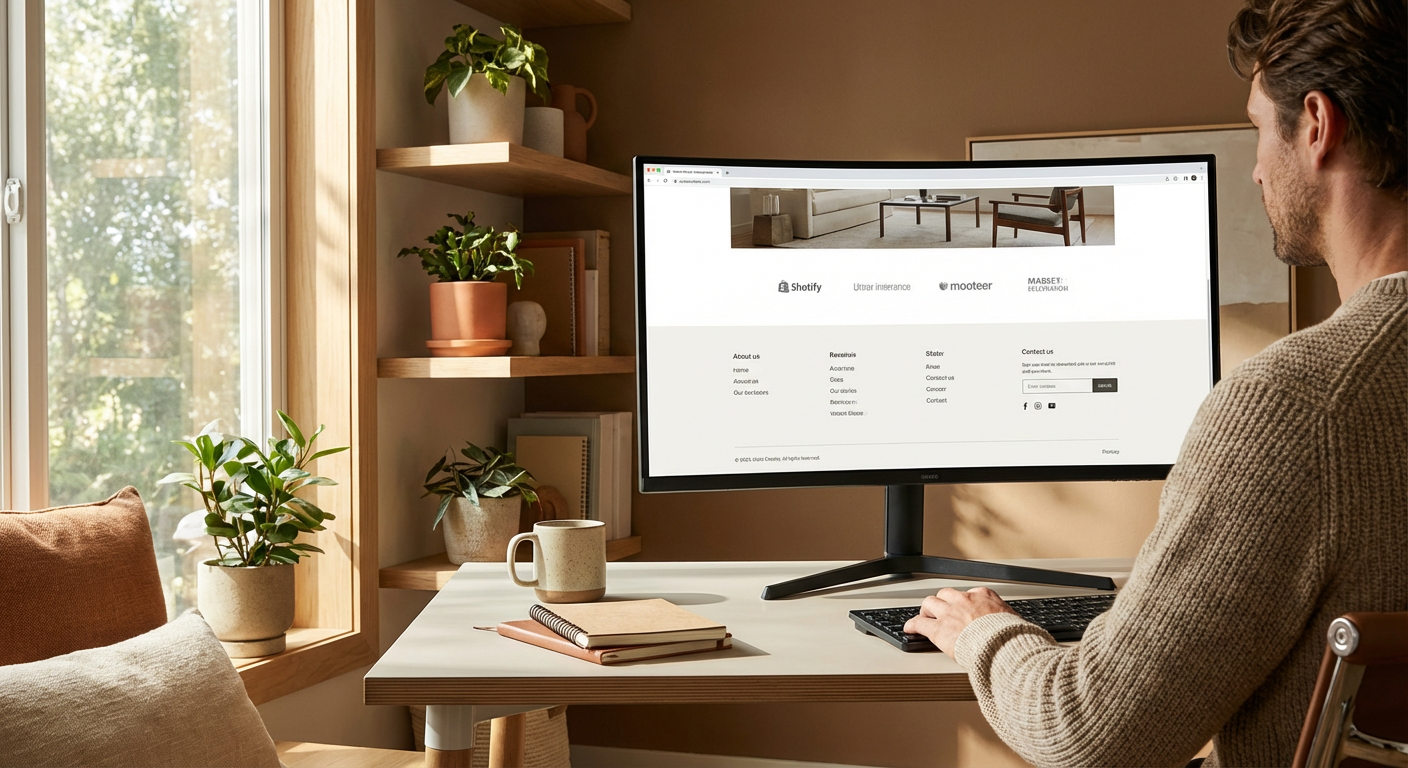
Use headings and columns to logically group related information. For instance, "Company," "Services," "Resources," "Legal." This makes the footer scannable and easy to navigate.
3. Sufficient White Space
Don't cram everything together. Give elements room to breathe. White space improves readability and makes the footer feel premium, not packed.
4. Responsive Design
This should be a given for any modern website, but it bears repeating. Your footer needs to look just as good and be just as functional on a smartphone as it does on a desktop monitor. Columns should stack neatly, and links should be tappable.
5. Subtle Branding
A small version of your logo in the footer can subtly reinforce your brand identity without being overly imposing.
Real-World Impact: FunnelDonkey's Footer Philosophy
At FunnelDonkey, we don't just preach this stuff; we live it. When we build a premium website, the footer isn't an afterthought; it's an integral component of the overall strategy.
For our clients, especially those requiring strong local presence (like if you're battling for SEO in Hurricane, UT), we meticulously craft footers that include NAP consistency, geo-targeted links, and calls to action relevant to their service areas.
For e-commerce or lead generation sites, we ensure crucial internal links are present, pointing to high-converting product categories, service pages, or lead magnets. We treat it as a secondary opportunity to capture attention and direct traffic.
It’s not just about stuffing keywords or meeting a checklist; it's about understanding user behavior. What information are they seeking at the very end of their journey on a page? What final push can we give them towards a conversion?
Actionable Steps: Audit Your Own Footer
Now, it’s your turn. Open your website in a new tab. Scroll to the bottom. Get an honest look at your footer. Ask yourself:
- Is it clean and organized, or a digital mess?
- Does it include all the essential legal and contact information?
- Does it adequately support your local SEO efforts (if applicable)?
- Are there any clear calls to action or lead magnets?
- Does it effectively guide users to other important parts of your site?
- Is it visually consistent with the rest of your brand?
- Does it make you look trustworthy and professional?
If you answered "no" or "I don't know" to any of these, congratulations—you've just identified a huge opportunity for improvement.
Don't let your website's workhorse stand idle. Unleash the power of your footer. It’s a small space with massive potential to impact your user experience, SEO, and ultimately, your bottom line.
Ready to build a website where every pixel works its tail off?
Your website deserves a strategic brain behind every element, from the hero section to the humblest footer. At FunnelDonkey, we don't just build pretty websites; we build intelligent, conversion-focused platforms that drive real results.
No more guessing games. No more generic templates. Just bold, persuasive design and content that makes your competitors look like they're still stuck in 2005.
Want to see what a properly optimized website (yes, including an incredible footer) can do for your business? Curious about the investment? Use our cost estimator or simply reach out. Let's talk about turning your website into a prime asset.
It's time your digital storefront worked as hard as you do. View our pricing or contact us today to schedule a no-BS consultation.