The Psychology of Web Design: Colors, Layout, and Trust
Learn about the psychology of web design: colors, layout, and trust and how it impacts your business website. Practical insights from FunnelDonkey, St. Georg...
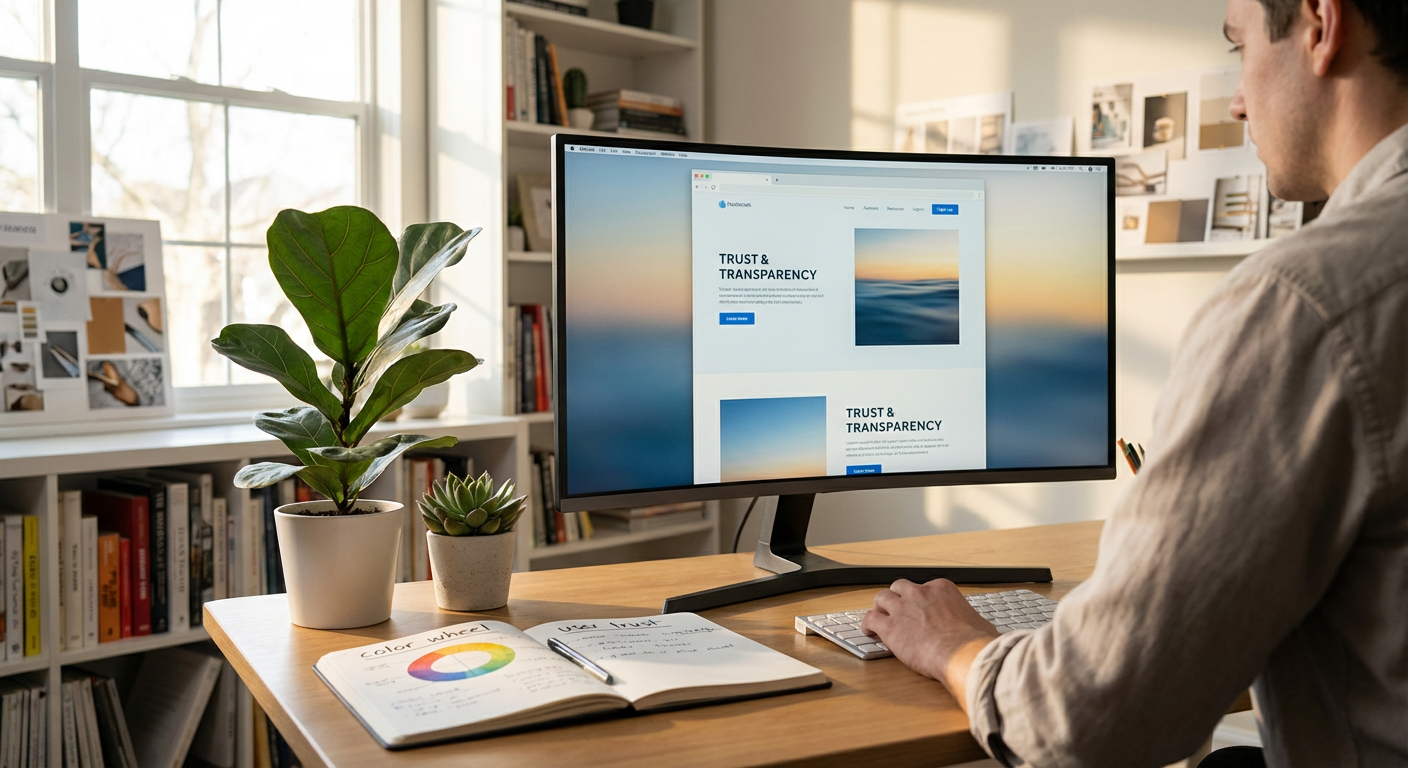
Your Website Isn't Just Code. It's a Mind Game.
Forget pixels and platforms for a moment. Your website isn't merely a digital brochure; it’s a finely tuned psychological instrument. Every color, every layout choice, every micro-interaction is either whispering "trust me" or screaming "get out."
We’re not talking about some woo-woo mind tricks here. This is about leveraging fundamental human psychology to build a website that doesn't just look pretty but actually converts. It’s about understanding how your visitors' brains work, often subconsciously, and designing an experience that guides them exactly where you want them to go.
At FunnelDonkey, we don't just build websites; we engineer experiences. We understand that your online presence is your most powerful sales tool. And to make it powerful, you need to understand the psychology behind it. Let's peel back the layers and see what makes a truly effective web design tick.
The Color Conundrum: More Than Just Pretty Hues
Think colors are just for aesthetics? Think again. Every shade, every tint, every saturation level has deeply ingrained psychological associations. These aren't universal laws – culture plays a huge role – but there are undeniable patterns that influence perception and action.
The Emotional Palette: What Your Colors Are Saying
- Blue: Trust, reliability, security, calmness. Think banks, tech companies, healthcare. It’s why so many corporate logos lean blue. Want to scream "we're stable"? Go blue.
- Red: Urgency, passion, excitement, danger. Great for calls to action, sales, or industries needing high energy. Use sparingly, unless you’re selling fire extinguishers.
- Green: Nature, growth, health, prosperity. Ideal for environmentally conscious brands, finance, or anything related to tranquility and well-being. It’s the color of money, after all.
- Yellow: Optimism, warning, cheerfulness. Can be great for grabbing attention, but too much can feel demanding or cheap. Think of a taxi or a caution sign.
- Orange: Enthusiasm, creativity, warmth. Often used to signal fun, youth, or accessibility. It’s friendly, but not as aggressive as red.
- Purple: Luxury, creativity, wisdom, royalty. Often associated with high-end products, spiritual services, or creative endeavors. It's sophisticated.
- Black: Power, sophistication, professionalism, luxury. Classic and timeless. Great for high-end brands, but can feel heavy or intimidating if overused.
- White: Purity, simplicity, cleanliness, spaciousness. Essential for creating breathing room and a modern aesthetic. It’s the canvas for everything else.
Choosing your primary and accent colors isn't just about what "looks good." It's about what psychological message you want to convey. Are you a steadfast financial advisor, or a dynamic e-commerce startup? Your color choices should reinforce that identity.
Contrast & Call to Action: Making Them Look (and Click)
Beyond individual color meanings, the strategic use of contrast is paramount. Your call-to-action (CTA) buttons, for instance, need to pop. They need to stand out from the rest of your design like a beacon in a storm.
"A well-chosen CTA color provides visual relief and a clear pathway for the user. It's not just about aesthetics; it's about guiding their eyes to the desired action."
This isn't arbitrary. Our brains are wired to notice anomalies. A brightly colored button against a more subdued background is an anomaly. It grabs attention. It tells the user, "Hey, this is important!
Ready to build a website that uses color science to convert? Check out our web design services.
Layout Logic: The Invisible Hand Guiding Your Visitors
Your website’s layout isn't just a grid; it's a narrative. It dictates flow, highlights importance, and creates a hierarchy of information. A bad layout is like trying to read a book where pages are shuffled randomly – utterly frustrating.
The F-Pattern and Z-Pattern: Eyes on the Prize
Researchers have tracked how users scan web pages, revealing common patterns:
- The F-Pattern: Users often scan in an 'F' shape, reading horizontally across the top, then down a bit, another horizontal scan, and then a vertical scan down the left side. This means your most crucial information, navigation, and primary calls to action should be placed in these high-visibility areas. Your visitors skim, so make their skimming count.
- The Z-Pattern: For simpler, less content-heavy pages, users might follow a 'Z' pattern: left to right across the top (header), then diagonally down to the left, and finally across to the right (bottom/footer). This often applies to landing pages or minimalist designs.
Understanding these patterns allows us to strategically place your value proposition, primary navigation, and crucial CTAs where they're guaranteed to be seen. Fail to do so, and your message gets lost in the digital ether.
If you're wondering how your current site measures up, our website cost estimator can give you a preliminary idea of what it takes to get it right.
Whitespace: The Art of Breathing Room
Whitespace (or negative space) isn't just empty space; it's an active design element. It makes text more readable, reduces cognitive load, and draws attention to specific elements. Imagine a gallery with paintings crammed onto every wall – overwhelming, right? Now imagine them tastefully spaced with plenty of white space around each. That’s the power of negative space.
Too much clutter, too many elements vying for attention, and your visitors get overwhelmed. They bounce. Whitespace provides clarity. It makes your important content stand out.
Visual Hierarchy: What's Most Important Here?
Visual hierarchy is the arrangement of elements in a way that suggests importance. This is achieved through:
- Size: Larger elements generally appear more important.
- Color & Contrast: As discussed, vibrant colors can draw the eye.
- Placement: Elements at the top or center often get more attention.
- Proximity: Related items should be grouped together.
- Typography: Different font sizes, weights, and styles can indicate hierarchy.
Without a clear visual hierarchy, your website becomes a jumbled mess. Visitors don’t know where to look or what to do. They can’t distinguish your main heading from a footnote. This isn't just annoying; it kills conversions.
Learn more about guiding your visitors with precision in our post on Navigation Design: Stop Making Visitors Think.
The Trust Factor: Why People Stay (or Bounce)
Ultimately, all the pretty colors and clever layouts in the world won't matter if your visitors don't trust you. Trust is the bedrock of all online transactions, relationships, and conversions. And it's built or broken in milliseconds.
Psychological Triggers for Trust
- Professionalism & Polished Design: A clean, modern, well-maintained website signals legitimacy. A dated, clunky, or buggy site screams "amateur hour." Your brain instantly associates quality of design with quality of business.
- Clear Communication: Is your message unambiguous? Do visitors immediately understand what you do, who you serve, and why they should care? Jargon and ambiguity erode trust faster than you can say "synergistic paradigm shift."
- Social Proof: Testimonials, client logos, case studies, reviews, and badges (e.g., "Featured In...") all act as powerful endorsements. We are social creatures; we trust what others trust.
- Security Signals: SSL certificates (the padlock in the URL bar), mentions of data privacy, and secure payment badges are non-negotiable, especially for e-commerce or any site collecting sensitive information. Visitors are increasingly wary – and rightly so.
- Contact Information & Accessibility: A clear "Contact Us" page with a phone number, email, and physical address (if applicable) demonstrates transparency. Hiding your contact info makes you look like you have something to hide.
- Consistency: Your brand messaging, visuals, and tone should be consistent across your website and other channels. Inconsistency breeds uncertainty.
The Scarcity Principle: Use With Caution
The scarcity principle, where perceived limited availability increases desire, is a powerful psychological tool. "Only 3 left in stock!" or "Offer ends tonight!" can drive immediate action. However, it must be used ethically and genuinely. Overuse or fake scarcity can backfire, making your brand look manipulative and cheap.
Authority & Expertise: Show Them You Know Your Stuff
Establishing yourself as an authority in your niche builds immense trust. This can be achieved through:
- Expert Content: High-quality blog posts, guides, and whitepapers demonstrate your knowledge. (Psst, like this very blog post you're reading!) Check out why Blogging Still Matters for SEO in 2025.
- Accreditations & Awards: Displaying industry affiliations, certifications, or awards signals credibility.
- Thought Leadership: Appearing in well-known publications or speaking at industry events position you as a leader.
When you demonstrate expertise, you're not just selling a product or service; you're selling a solution backed by knowledge. And that's priceless.
For local businesses in Southern Utah, building trust often hinges on local relevance. Our local SEO services help ensure you're the trusted choice in your area, whether you're in St. George or Cedar City.
The Power of Storytelling: Engaging the Human Element
Humans are hardwired for stories. From ancient cave paintings to modern Netflix binges, narratives captivate us. Your website shouldn't just present facts; it should tell a story – your story, and more importantly, your customer's story.
Your Brand Story: Why You Do What You Do
Don't just list features; explain your mission, your values, and the problem you set out to solve. People connect with purpose. They want to know the human element behind the business.
When you share your journey, you build rapport and relatability. This is why "About Us" pages are anything but trivial. They're a chance to forge an emotional connection.
The Customer's Journey: Solving Their Pain Points
Even more powerful than your story is the story of your customer – where they are now, the problems they face, and how your product or service is the hero that solves those problems, leading them to a better future.
- Identify the pain point: Start by clearly stating the challenge your target audience faces.
- Present your solution: Introduce your offering as the answer.
- Show the transformation: Paint a picture of the positive outcome your customer will experience.
This narrative arc makes your offerings resonate on a deeper, emotional level. It's not about what you sell, but how you change lives (even small ones).
The Psychology of Micro-Interactions: Enhancing the Experience
Micro-interactions are the subtle, single-purpose moments of feedback on your website. Think about what happens when you click a button, hover over an icon, or submit a form. These small details have a disproportionate impact on user experience and trust.
- Visual Feedback: When a button changes color on hover or a form field highlights when active, it reassures the user that their action was registered. This prevents frustration and provides immediate feedback.
- Animations & Transitions: Subtle animations can guide the eye, provide context, and make an interface feel more alive and responsive. They can transform a static experience into a dynamic one.
- Loading States: Instead of a blank screen, a well-designed loading animation or progress bar manages expectations and reduces perceived waiting time. It’s the difference between "Is this thing broken?" and "Okay, I'll wait a second."
These tiny touches demonstrate attention to detail and polish, reinforcing the idea that your brand is thoughtful and professional. If you care about the small stuff, you likely care about the big stuff too.
SEO and Psychology: A Match Made in Heaven
While often seen as purely technical, SEO is deeply psychological. Google's algorithms are constantly trying to mimic human judgment. A website that resonates psychologically with users – that builds trust, engages, and converts – is inherently a website that Google will favor.
Think about it: if users trust your site, they spend more time on it, visit more pages, and are less likely to bounce back to search results. These are all positive signals to search engines. Psychological design choices directly influence user engagement metrics, which in turn influence your search rankings.
For businesses in Southern Utah looking to dominate their local search results, weaving psychological design with robust SEO strategies is non-negotiable. Whether you're in Cedar City or Hurricane, UT, making a human connection online is key to ranking.
Our team at FunnelDonkey bakes SEO best practices (and psychological principles) directly into our web design projects from the ground up. It’s not an afterthought; it’s part of the blueprint.
Want to see what kind of ROI you could be looking at? Try our ROI calculator.
Don't Be a Digital Donkey: Build for the Brain
In the crowded digital landscape, generic, thoughtless web design simply won't cut it. You're not just competing for attention; you're competing for trust, clicks, and conversions. And to win, you need to understand the minds of your visitors.
Every element on your website – from the nuanced emotions evoked by your color palette to the intuitive flow of your layout, and the subtle cues that build unwavering trust – works in concert to deliver an experience. This experience either persuades or repels.
At FunnelDonkey, we believe in building websites that do more than just exist. We craft digital experiences that are psychologically optimized to attract, engage, and convert your ideal customers. We distill complex psychological principles into practical, impactful designs that deliver tangible results.
Ready to Master the Mind Game?
Stop guessing what your audience wants. Stop settling for a website that's just "good enough." It's time to build a digital presence that leverages the intricate dance of human psychology to drive your business forward.
Let us help you design a website that doesn't just look premium but performs like it too. A website engineered for the human brain, designed for true conversion.
Ready to get started?
Explore our transparent pricing or contact us today for a no-bull conversation about your next project.