Brutalist Web Design: Bold Move or Bad Idea?
Baffled by those brutalist websites? We are too! Let's dive into this divisive design trend and see if it's genius or garbage.
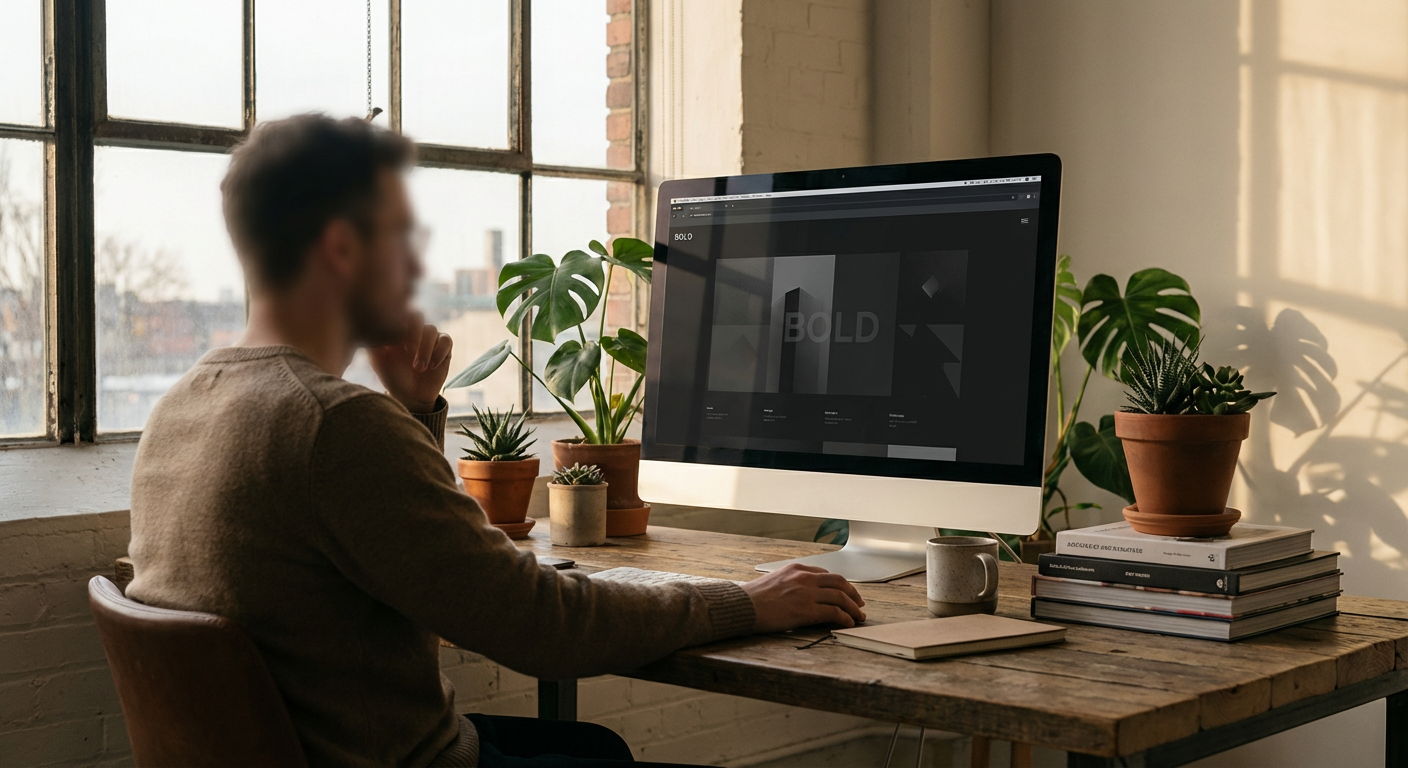
Brutalist Web Design: Bold Move or Bad Idea?
St. George. Home of majestic canyons, epic hikes, and… a burgeoning design scene? We’re not kidding. While Utah’s “Little Dixie” might conjure images of red rock and sun-baked serenity, FunnelDonkey is here to inject a healthy dose of digital audacity. And today, we’re diving headfirst into a web design trend that’s as divisive as pineapple on pizza: Brutalist web design. Is it a stroke of genius that cuts through the digital noise, or a digital dumpster fire that’ll send users scrambling for the back button? Let’s find out.
Forget the sterile, cookie-cutter templates that flood the internet like a particularly uninspired wave. Brutalism, in web design, is the digital equivalent of a concrete monument – raw, unapologetic, and undeniably present. It’s a style that embraces the stark, the functional, and the downright unconventional. But before you picture a naked website with nothing but Times New Roman and a blinking cursor, let’s get real.
What Exactly *Is* Brutalist Web Design, Anyway?
Originating from the architectural movement of the mid-20th century, Brutalism celebrated raw materials (think concrete, steel, glass) and functional form over ornate decoration. Applied to web design, this translates to a stripped-down aesthetic that prioritizes functionality and often eschews traditional design conventions. It’s less about pretty pixels and more about impactful communication.
- Emphasis on raw structure: Minimal use of shadows, gradients, and decorative elements. Think bold typography, sharp edges, and a clear visual hierarchy that’s almost aggressively apparent.
- Unapologetic use of raw materials (digitally speaking): This can mean plain backgrounds, unadorned text, and a general lack of “fluff.”
- Functional focus: The goal is often to make information incredibly accessible and straightforward, even if the presentation is unconventional.
- Intentional imperfection: Unlike the polished perfection often sought in mainstream design, Brutalism can embrace a certain rawness, a visible grid, or even seemingly clunky layouts.
Think of it as the digital opposite of the overly-polished, often soulless websites churned out by platforms like Wix or Squarespace when left to their own devices. While those platforms aim for ease of use and broad appeal, Brutalism aims for impact and a distinct identity. It’s a statement piece, not a wallpaper.
The "Anti-Design" Movement: Why Rebels Go Brutalist
Brutalism is often lumped into the broader "anti-design" movement. This isn't about actively destroying design principles; it's about questioning the prevailing norms and challenging what’s considered "good taste." In a world saturated with aesthetically similar websites, anti-design rebels aim to stand out by being different, often by leveraging principles that would normally be considered design faux pas.
Why would a business *choose* to be an "anti-design" entity? Because the digital landscape is crowded. Your potential customers are bombarded with thousands of visual messages daily. If your website looks like every other business in your industry, how will it ever capture their attention? Brutalism forces a double-take. It’s a strategic disruption.
It’s about rejecting the idea that every website needs to be a pastel-hued, gradient-filled, rounded-corner dreamscape. Brutalism says, "Look at me. I'm here. I have something important to say, and I’m not going to hide it behind a veil of predictable prettiness." It’s a bold stance, and for the right brand, it can be incredibly effective.
The Aesthetic: More Than Just Ugly?
Let’s address the elephant in the virtual room: Brutalist websites can sometimes look… well, a bit jarring. Ugly, even. But that’s often the point. The aesthetic embraces:
- Bold, often large-scale typography: Think strong serifs, impactful sans-serifs, and text used as a primary design element.
- Monochromatic or limited color palettes: Often relying on stark contrasts like black and white, or a very restrained use of color to highlight key elements.
- Asymmetrical layouts: Shifting away from perfectly balanced grids to create a more dynamic and sometimes unsettling visual flow.
- Visible elements: Buttons that look like buttons, clear navigation, and a general sense of "what you see is what you get."
- Blank space (or lack thereof): Sometimes embracing a dense, information-heavy layout, other times using vast amounts of white space to emphasize starkness.
This isn't about throwing random elements onto a page. There's a deliberate intent behind the starkness. It's about saying, "We're not trying to impress you with bells and whistles; we're here to deliver value, and this is the most direct way to do it." It’s a refreshingly honest approach in an industry often obsessed with superficial gloss.
Typography as the New Black
In Brutalist design, typography isn't just for reading; it's a visual anchor. Large, attention-grabbing fonts, stark color contrasts for text, and intelligent spacing are crucial. It’s about making sure your message is not only legible but commands attention, much like a bold headline in a gritty newspaper.
The Grid That Isn't Always There
While traditional web design often relies on rigid, invisible grids for perfect symmetry, Brutalism might play with loose grids or even break them intentionally. This creates a sense of dynamism and can lead the user’s eye through the content in unexpected ways. It’s controlled chaos, designed to guide, not confuse.
When Does Brutalism Make Sense? The Strategic Case
So, is Brutalism a fad destined for the digital dustbin or a legitimate strategic choice? For certain brands, it's absolutely the latter. If your brand identity is:
- Edgy and unconventional: Think art galleries, avant-garde fashion labels, experimental musicians, or niche tech startups aiming for a disruptive image.
- Focused on raw, unfiltered authenticity: Brands that pride themselves on being no-nonsense and direct will find a natural home here.
- Seeking to make a strong, memorable statement: If blending in is the kiss of death for your business, Brutalism can be your megaphone.
- Serving a niche audience that appreciates the aesthetic: Some communities actively seek out the unique and the stark.
For these businesses, a Brutalist website isn't just a design choice; it's a declaration of independence. It communicates confidence, a willingness to be different, and a focus on substance over fleeting trends. It’s a way to signal to your audience that you’re not playing by the same rules as everyone else.
Consider the alternative: a website that looks like a thousand others. It might be aesthetically pleasing in a generic way, but does it stop users in their tracks? Does it make them curious? Brutalism aims to do just that. It’s a strategic gamble that can pay off handsomely if aligned with the brand’s core identity.
The Pitfalls: When Brutalism Becomes Just… Bad
Now, for the brutal truth. Simply slapping some large fonts on a plain background and calling it "Brutalist" is a recipe for disaster. This style requires a deep understanding of design principles, even as it subverts them. Without that, you're not making a statement; you're just making a mess.
Common missteps include:
- Poor readability: Stark contrast is good, but illegible text is bad. If users can’t read your copy, your website is failing.
- Lack of clear navigation: While asymmetry is acceptable, a completely illogical user flow will lead to frustration and abandonment.
- Ignoring mobile responsiveness: A Brutalist desktop design that looks like a pixelated nightmare on mobile is inexcusable. Your “bold move” just became a mobile user’s worst nightmare.
- No clear call to action: If the design is so abstract that users don’t know what they’re supposed to do next, your ROI will plummet faster than a rock in Zion National Park.
- Trying to be edgy without substance: If the design is the *only* interesting thing about your website, you have a problem. The raw aesthetic should *complement*, not *replace*, valuable content and a clear purpose.
This is where DIY website builders like GoDaddy or even advanced users on Squarespace can falter. They offer tools that can *mimic* a Brutalist look, but they rarely provide the conceptual depth or strategic execution required for it to be truly effective. The result? A website that looks unintentionally broken, not intentionally bold.
Usability vs. Unusability: The Fine Line
The core of Brutalism in web design is functionalism. It’s about making things work and communicating clearly. The danger lies in mistaking "raw" for "unusable." A website should always aim to guide the user toward their goal, whether that's buying a product, contacting you, or finding information. If the Brutalist aesthetic actively hinders that process, it's not a bold move; it's a self-sabotaging one.
The Danger of the "Anti-Design" Excuse
Some argue that "it's supposed to look that way" because it's anti-design. This is a lazy excuse for poor execution. True Brutalist or anti-design websites are meticulously crafted. The "rawness" is intentional and purposeful, not a byproduct of carelessness. If your website looks like it was designed in 1998 by a team that hated their jobs, you’ve missed the mark entirely.
Brutalism in the Wild: Examples to Study
The best way to understand the nuances of Brutalist web design is to see it in action. While specific URLs can change and trends evolve, look for websites that embody these principles:
- Purposeful use of stark palettes: Think bold black and white, or a single accent color used strategically.
- Dominant, strong typography: Text that isn’t just readable but is a foundational design element.
- Clear, unadorned calls to action: Even in its rawness, the site effectively tells users what to do.
- A distinctive, memorable feel: You won't forget encountering these sites.
Many experimental design studios, forward-thinking art collectives, and some cutting-edge tech companies have embraced elements of Brutalism. They use it to convey innovation, seriousness, or a refusal to conform. It’s a visual language that speaks of confidence and a departure from the norm.
The FunnelDonkey Take: Bold Strategy, Not Just Bold Looks
Here at FunnelDonkey, we appreciate a bold move. We’re not about churning out bland, forgettable websites. We believe your online presence should be as unique and powerful as your business. Brutalist web design, when executed with strategic intent, can be a powerful tool.
However, we also believe in results. A website, no matter how aesthetically daring, must serve a purpose. It needs to attract, engage, and convert. Brutalism isn't just about looking cool; it's about communicating value in a compelling, unconventional way.
If you’re considering a Brutalist approach, ask yourself:
- Does this aesthetic authentically represent my brand?
- Will this design help me achieve my business goals?
- Can we execute this in a way that is both impactful and user-friendly across all devices?
These are the questions we help our clients answer. We don't just build websites; we build digital experiences designed to drive growth. Whether that means embracing the stark power of Brutalism or crafting a polished, conversion-optimized masterpiece, our focus is on your success.
We’re not afraid to push boundaries, but we always do it with a strategy. A website that looks radical but performs poorly is just a vanity project. A website that uses a bold aesthetic to *enhance* its performance? That’s where the magic happens.
If you're ready to ditch the generic and explore a web design strategy that’s as audacious as it is effective, let's talk. We can help you figure out if Brutalism is your brand’s jam or if another approach is better suited to crush your goals. Ready to see what a truly powerful online presence looks like? Or maybe just curious about the potential online ROI for your business? Use our handy ROI calculator and then let's connect.