Card-Based Design: Why Every Website Looks the Same Now
Card-based design: it’s the secret sauce making every site feel oddly familiar now. What’s next, FunnelDonkey?
November 12, 2025 8 min read
Is Your Website Drowning in a Sea of Sameness?
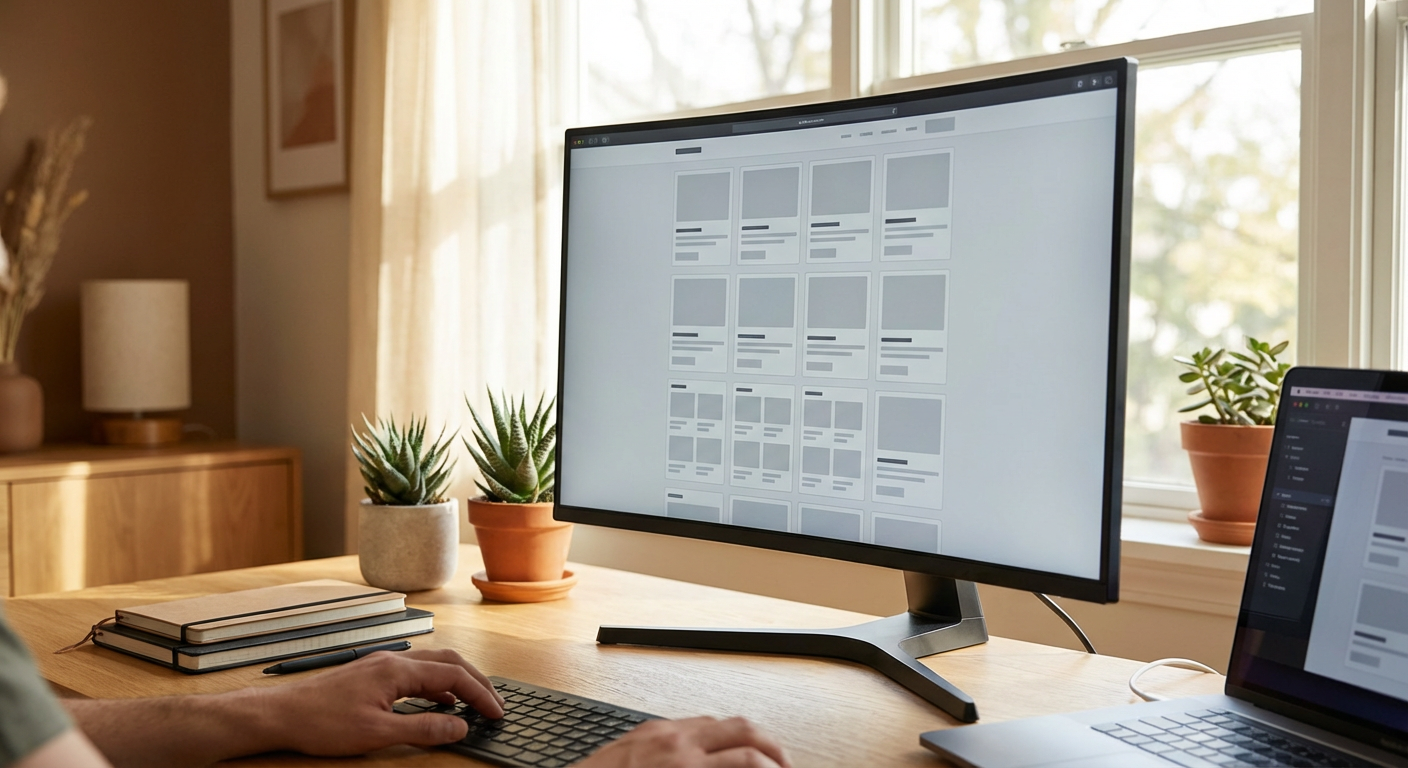
Let's face it, scrolling through the internet these days can feel like flipping through a catalog of déjà vu. Every site seems to sport the same sleek, modular look. You've seen it a thousand times: the perfect grid, the neatly stacked boxes, the friendly imagery. Why? Because we've all fallen head-over-heels for the siren song of card-based design.The Rise of the Card Stack: From Playing Cards to Pixels
Remember playing cards? Those neat little rectangles, each holding distinct information – a rank, a suit, maybe a fancy illustration. The digital world, in its perpetual quest for organized simplicity, stumbled upon this brilliant, tangible metaphor and ran with it. Card-based design, or the "card UI pattern," is essentially the digital manifestation of those familiar playing cards. Think about it: a card is a self-contained unit. It presents a piece of information, an action, or an image in a digestible chunk. This makes it perfect for the fragmented, often mobile-first way we consume content online. A news article headline and snippet? Card. A product image and price? Card. A social media post? You guessed it – a card.The appeal is undeniable:
- Modularity: Cards can be easily rearranged, resized, and stacked, making them incredibly flexible for different screen sizes and layouts.
- Scanability: Our brains are wired to process information in chunks. Cards break up content, making it easier for users to quickly scan and find what they're looking for.
- Visual Hierarchy: The distinct boundaries of cards help establish visual order and guide the user's eye.
- Responsiveness: Cards naturally adapt to various screen dimensions, stacking neatly on smaller devices and spreading out on larger ones.
The "Wix Effect" and the Democratization of Design (Sort Of)
Suddenly, building a website became less about arcane coding knowledge and more about dragging and dropping. Platforms like Wix, Squarespace, and even GoDaddy’s website builder threw open the digital doors, offering pre-built templates and intuitive interfaces. This was, in many ways, a revolution. It empowered small business owners and individuals to establish an online presence without needing a degree in computer science. However, with great democratization comes… well, a lot of the same. When the primary tools available for building websites rely heavily on pre-defined templates that are themselves built using common design patterns (like card-based layouts), the inevitable outcome is a sea of visual similarity. These platforms, while excellent for getting started, often guide users toward familiar, easy-to-implement solutions. And what’s easier and more familiar than a card layout?Consider these scenarios:
- A bakery owner uses a Squarespace template that prominently features large image cards for their pastries.
- A local chiropractor’s office picks a Wix theme with service cards neatly aligned in rows.
- A freelance photographer opts for a GoDaddy template showcasing their portfolio in a grid of clickable image cards.
Beyond the Grid: When Card Design Becomes a Crutch
The problem isn't card design itself. It's how it's often applied – or, more accurately, *misapplied*. Card-based design is a powerful tool in the UI designer's arsenal, but like any tool, it can be misused or overused. When every piece of content is shoved into a card, regardless of its inherent nature, the design starts to feel… rigid. Lifeless. Generic. This is where the "everyone's website looks the same" phenomenon truly kicks in. It’s the result of applying a single, popular UI pattern to every conceivable type of content and user interaction.The Echo Chamber of UI Patterns
UI patterns are essentially reusable solutions to common design problems. They are the established best practices that help users navigate interfaces predictably. Think of navigation menus, search bars, notification badges – these are all UI patterns. Card design is simply one of the most prevalent and visually distinctive UI patterns of the last decade. When design trends become deeply intertwined with popular website builders, these patterns get amplified. Builders offer readily available card components with minimal customization options. Users, wanting a "good-looking" website quickly, gravitate towards these components. And before you know it, your local plumbing service’s website starts to feel eerily similar to an online art gallery.When Structure Trumps Substance
The danger lies in prioritizing the structure of card design over the substance of your content. Are you using cards because they genuinely enhance the presentation of your information, or are you using them because your template or builder makes it the easiest option?Ask yourself:
- Does your blog post feel more engaging when broken down into separate content cards, or does it feel segmented and less personal?
- Are your services best presented as isolated, click-through cards, or would a more integrated, narrative approach be more persuasive?
- Does the visual consistency of cards enhance your brand, or does it make your unique offerings blend into the background noise?
The Nuance of Navigation and User Flow
Excellent web design isn't just about how things look; it's about how they *flow*. It's about guiding the user intuitively from point A to point B, making their journey seamless and, dare we say, enjoyable. Card-based design, when executed thoughtfully, can certainly contribute to good navigation. However, an overreliance can create friction points rather than smooth pathways. Imagine navigating a complex software application or a lengthy online course. If every single piece of information, every button, every link is contained within its own distinct card, the sheer number of clicks required can become exhausting. This is where the limitations of strict card implementations become apparent.Consider the difference between:
- Clicking through multiple individual cards to find related information within a single topic versus
- Having that related information presented more cohesively within a single section, perhaps using subtle visual dividers rather than hard card borders.
Breaking Free: Embracing Distinction in a Homogenized Landscape
So, how do you escape the tyranny of the template and the endless grid of identical cards? It requires a shift in thinking – moving beyond convenience to a focus on true differentiation. It’s about understanding that your website is not just a digital brochure; it's a dynamic extension of your brand.The Power of Intentional Design Choices
Instead of asking, "What card layout does my template offer?" start asking, "What is the best way to present this specific piece of information or facilitate this particular user action?" This fundamental shift leads to more intentional design choices.This might involve:
- Varying Layouts: Don't be afraid to mix up your layouts within a single page or across your site. A striking hero section can be followed by a more narrative-driven explanation, then perhaps a strategically placed card or two for key calls to action.
- Strategic Use of Whitespace: Instead of cramming everything into discrete cards, leverage ample whitespace to create breathing room and emphasize important elements. This can make your content feel more premium and less crowded.
- Custom Interactive Elements: Think beyond static cards. Can you incorporate subtle animations, parallax scrolling, or unique hover effects to make your content more engaging?
- Typography-Driven Design: Powerful typography can break up monotony and create a strong visual identity without relying on rigid card structures.
When Generic Fails: The Case for Unique Branding
Let's be blunt: if your website looks like every other small business website built on a popular platform, you’re missing a massive opportunity. Your brand is unique. Your services are distinct. Your story deserves to be told in a way that captures attention and resonates with your target audience.Consider this:
- First Impressions: Users often judge a business within seconds of landing on their website. A generic design fails to make a memorable first impression.
- Credibility and Trust: A website that feels thoughtfully designed and unique can convey a sense of professionalism and attention to detail, fostering greater trust.
- Competitive Advantage: In a crowded market, a distinctive online presence is a powerful competitive differentiator. Why blend in when you can stand out?
Measuring What Matters: The ROI of Distinctiveness
All this talk of design trends and aesthetics sounds great, but at FunnelDonkey, we’re grounded in results. The ultimate question isn't just "Does my website look good?" but "Is my website generating a return on investment?" While the specific impact of moving away from card-based design to a more custom approach isn't something you can pull from a generic stat sheet (because every business and audience is different!), the principles are clear. A website that is uniquely designed to serve its audience and communicate its brand’s value proposition is inherently more likely to perform better.Think about how a custom design can impact your key metrics:
- Conversion Rates: A user experience tailored to your specific goals can lead to more sign-ups, inquiries, and purchases.
- Bounce Rates: Engaging, well-structured, and visually distinct content is more likely to keep visitors on your site.
- Time on Site: When visitors are captivated and find what they need intuitively, they tend to stay longer.
- Brand Recall: A memorable design makes your brand easier to recall when a potential customer has a need you can fulfill.