FunnelDonkeyFunnelDonkey
    Sign InStart My Website
    Web Design

    Accessibility in Web Design: Legal Requirement, Moral Imperative

    Your website's gotta be for EVERYONE, ya hear? That's not just the law, it's the right thing to do!

    December 1, 2025 7 min read
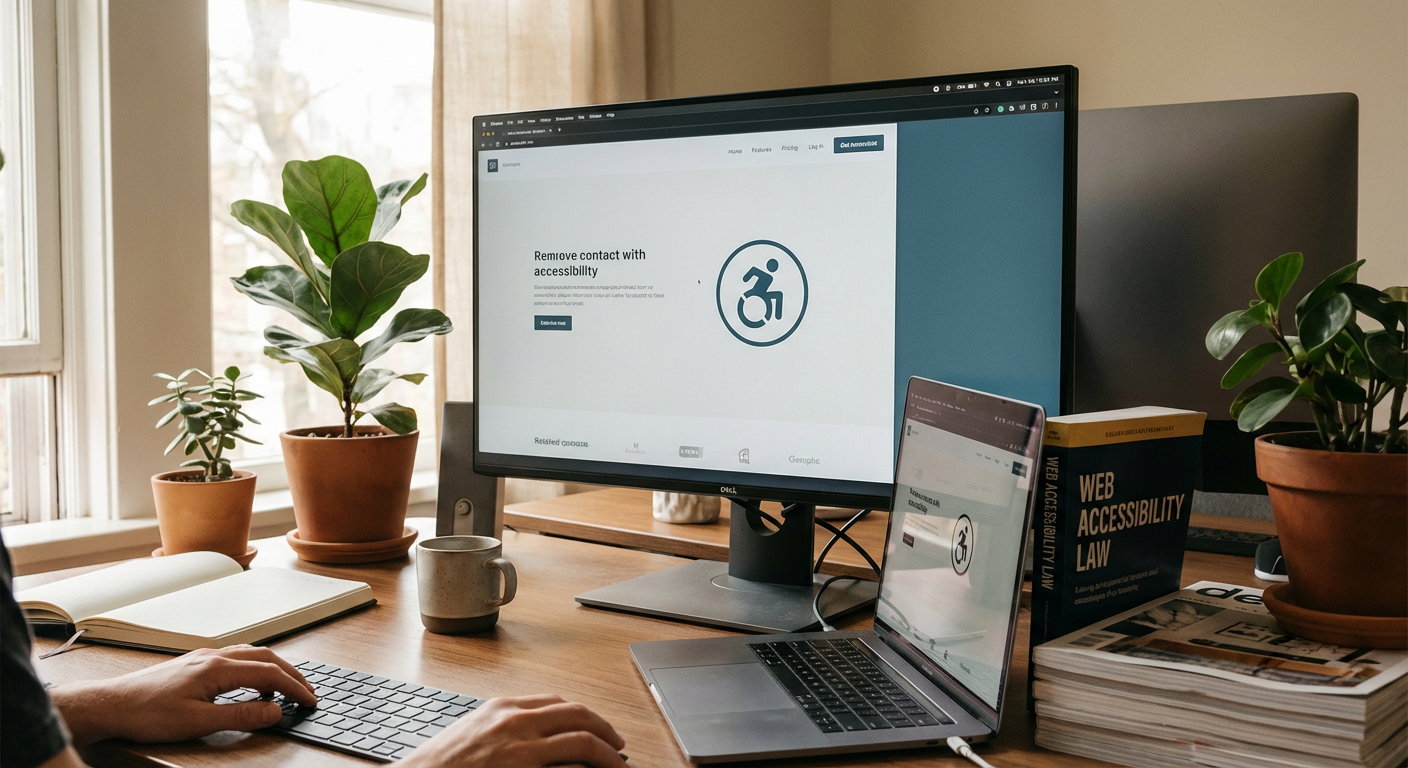
    Accessibility in Web Design: Legal Requirement, Moral Imperative — FunnelDonkey | Web Design

    The Elephant in the Digital Room: Why Your Website Needs to Be for Everyone

    Let's be brutally honest. You've probably poured countless hours, dollars, and maybe even a few tears into your website. It's a digital masterpiece, a virtual billboard, your online storefront. But what if the doors are locked for a significant chunk of your potential customers? We're not talking about a paywall or a complex signup process; we're talking about a fundamental barrier that renders your site unusable for people with disabilities. Yeah, it’s a conversation nobody *loves* to have, but ignoring it is like building a beautiful restaurant with no ramp. It’s not just bad business; it’s often illegal.

    Accessibility Isn't Just Nice-to-Have, It's Non-Negotiable

    Forget the idea that web accessibility is a niche concern for a select few. It’s a massive market. Globally, over 1 billion people live with some form of disability. In the US alone, that’s roughly 1 in 4 adults. Think about that for a second. That’s not a fringe group; that’s a significant portion of your potential customer base. If your website isn't accessible, you're effectively telling one out of every four people to take their business elsewhere. And let’s be clear: this isn't just about being a good samaritan. It’s also about avoiding nasty legal headaches.

    The ADA and Your Digital Domain

    The Americans with Disabilities Act (ADA) was groundbreaking legislation that prohibited discrimination based on disability. While it was enacted long before the internet became the ubiquitous force it is today, courts have consistently interpreted the ADA to apply to the digital realm. This means that if your business operates physically and your website serves as a gateway to your goods or services, your website must be accessible. Failure to comply can result in costly lawsuits, settlements, and significant reputational damage. We've seen too many businesses, especially those relying on the "build it and they will come" mentality of platforms like Wix or GoDaddy, get caught completely off guard. They assume because they used a template, they're automatically compliant. Spoiler alert: they’re usually not.

    Beyond the Law: The Moral Compass

    While legal compliance is a powerful motivator, there's a deeper, more fundamental reason to prioritize web accessibility: it's the right thing to do. Imagine trying to navigate the internet with a visual impairment, a hearing loss, a motor disability, or a cognitive difference. Without proper accessibility features, the digital world can be an isolating and frustrating place. Your website has the power to include or exclude. Choosing to include everyone fosters a more equitable and inclusive society, and frankly, it just makes for better business.

    WCAG: Your Roadmap to an Inclusive Web

    So, how do you actually *do* web accessibility? The most widely recognized and comprehensive guidelines are the Web Content Accessibility Guidelines (WCAG). Think of WCAG as the blueprint for building an accessible website. Developed by the World Wide Web Consortium (W3C), these guidelines provide a detailed framework for making web content more accessible to a wider range of people with disabilities. They're not just a checklist; they're a philosophy.

    The Four Pillars of WCAG

    WCAG breaks down accessibility into four core principles, often remembered by the acronym POUR: * Perceivable: Users must be able to perceive the information being presented (it can't be invisible to all of their senses). This means providing text alternatives for non-text content (like images), captions for audio and video, and ensuring content can be presented in different ways without losing meaning. * Operable: Users must be able to operate the interface (the interface cannot require interaction that a user cannot perform). This involves making sure all functionality is available from a keyboard, providing users enough time to read and use content, and creating content that doesn't cause seizures. * Understandable: Users must be able to understand the information as well as the operation of the user interface (the content or operation cannot be beyond their understanding). This means making text readable and understandable, making web pages appear and operate in predictable ways, and helping users avoid and correct mistakes. * Robust: Content must be robust enough that it can be interpreted reliably by a wide variety of user agents, including assistive technologies. This is the technical underpinning that ensures your site works with screen readers, magnifies properly, and future-proofs your build.

    Understanding WCAG Levels

    WCAG also defines three levels of conformance: A, AA, and AAA. * Level A: The minimum level of conformance, addressing the most fundamental accessibility issues. * Level AA: The most common target for organizations seeking to be compliant. It strikes a balance between a high level of accessibility and feasibility. * Level AAA: The highest level of conformance, representing the most accessible experience possible. While AAA is the ideal, aiming for AA is generally considered the standard for legal compliance and robust accessibility. Many legal demands will cite AA.

    The Pitfalls of DIY and Template-Driven Sites

    We see it all the time. A small business owner, keen to get online, latches onto a platform like Squarespace, Shopify, or even Wix and thinks, "Great, I'm done!" These platforms offer slick templates and drag-and-drop interfaces that make it seem easy to build a website. And for basic content, they can be. However, they often fall short when it comes to true web accessibility.

    Hidden Accessibility Traps

    Many templates, while visually appealing, are built with code that isn't inherently accessible. * Image Alt Text: A common oversight is failing to add descriptive alt text to images. Screen readers rely on this text to convey image information to visually impaired users. Many template-based sites make this an optional or easily forgotten step. * Keyboard Navigation: Can someone navigate your entire site using only their keyboard? Many template designs have issues with focus indicators (that little box that shows where you are on the page) or don't properly structure links for keyboard-only users. * Color Contrast: Visually striking designs can sometimes sacrifice legibility. Insufficient color contrast between text and background makes it difficult for users with low vision or color blindness to read. This is often overlooked in generic templates. * Form Accessibility: Complex forms, especially those with dynamically changing fields or confusing error messages, can be a nightmare for users with disabilities. While platforms are improving, relying solely on a template without a deep understanding of accessibility requirements is a gamble. You might get lucky, but it’s far more likely you’ll be leaving accessibility gaps. And remember, the responsibility for compliance rests with *you*, the website owner, not the platform provider.

    Why Your St. George Business Demands More

    Here in St. George, we understand the unique blend of local charm and burgeoning business that defines our community. You’re not just another business; you’re part of Southern Utah’s vibrant tapestry. Your website should reflect that. It should welcome everyone, from the local resident looking for a service to a new visitor exploring what our beautiful area has to offer. Generic solutions simply don’t cut it.

    Personalized Solutions for Utah Businesses

    At FunnelDonkey, we don't believe in one-size-fits-all. We understand that each business in St. George has its own story, its own audience, and its own unique needs. When we build your website, accessibility isn't an afterthought; it's baked into the foundation. We go beyond basic template-driven design to create custom solutions that are not only visually stunning and strategically sound but also fundamentally inclusive.

    Integrating Accessibility with Your Overall Strategy

    Web accessibility isn't just about ticking boxes; it's about enhancing the overall user experience. An accessible website is often a more user-friendly website for everyone. This improved user experience can have significant benefits for your search engine optimization (SEO) efforts, as search engines tend to favor well-structured, user-friendly sites. For example, clear heading structures (an accessibility requirement) are also great for SEO. Providing transcripts for videos or audio benefits both users and search engine crawlers. It’s a win-win-win: good for users, good for your brand, and good for your search rankings. Our comprehensive [SEO services](/services/seo) are designed to work hand-in-hand with an accessible website.

    The Accessibility Audit: A Detective's Work

    Is your current website a ticking legal time bomb? Are you unsure where you stand? That's where an accessibility audit comes in. Think of it as a deep dive into your website's digital DNA, scrutinizing every element for compliance with WCAG guidelines and identifying potential barriers for users with disabilities.

    What Does an Audit Uncover?

    A thorough audit involves both automated testing and manual review. Automated tools can catch some common issues, like missing alt text or low color contrast, but they can't replicate the experience of a human user, especially one relying on assistive technology. A comprehensive audit will typically examine: * Keyboard Navigability: Testing every interactive element to ensure it can be accessed and operated via keyboard alone. * Screen Reader Compatibility: Simulating how a screen reader (like JAWS or NVDA) would interpret your content. This includes checking ARIA attributes, heading structures, and semantic HTML. * Forms: Ensuring all form fields are properly labeled, error messages are clear and actionable, and the forms are logically structured. * Multimedia: Verifying that videos have captions and transcripts, and audio content has transcripts. * Content Structure: Confirming headings, lists, and other structural elements are used correctly to organize content logically. * Images and Non-Text Content: Checking that all meaningful images have descriptive alt text and decorative images are properly marked as such. * Color Contrast and Readability: Ensuring text is legible against its background, and that information is not conveyed by color alone. The goal is to pinpoint exactly where your website falls short and to provide actionable recommendations for improvement. For businesses looking to leverage platforms like WordPress, while more flexible than some drag-and-drop builders, responsible theme selection and careful implementation are still critical.

    Your Next Step Towards an Inclusive Digital Future

    Ignoring web accessibility is a risk you simply cannot afford to take. It’s a legal imperative, a moral obligation, and frankly, smart business. In St. George, your business deserves a website that welcomes everyone. It deserves a website that performs exceptionally, looks incredible, and opens its digital doors wide.

    Why Choose FunnelDonkey?

    We're not your average website agency. We're your strategic partners, your digital architects, and your honest advisors. When you partner with FunnelDonkey, you’re not just getting a pretty website; you’re getting a powerful, accessible, and strategically sound online asset. We pride ourselves on our transparent processes and our commitment to delivering tangible results for our clients. * Expertise: We live and breathe web design, with a deep understanding of accessibility standards and best practices. * Customization: We build bespoke solutions tailored to your unique business needs and target audience. * Compliance: We ensure your website meets WCAG guidelines and ADA requirements, minimizing legal risk. * **Integration:** We focus on creating a seamless user experience that supports your overall business objectives, including driving traffic and conversions. Ready to stop leaving money on the table and start building a website that truly works for everyone? Let’s talk about building a digital experience that reflects the inclusive spirit of St. George and propels your business forward. Explore our [pricing packages](/pricing) to see how we can help, or click below to start the conversation.

    Further Reading

    Share this article:

    Related Articles

    Ready to Build Your Website?

    Get a site built for rankings, conversions, and growth.

    We value your privacy

    We use cookies and similar technologies to improve your experience, analyze traffic, and personalize content. Read our Privacy Policy for details.