
The Service Business Funnel: Adapted for Non-Ecommerce
Level up your service game! We're ditching the shopping carts for client calls. Get ready to convert those leads into loyal fans.
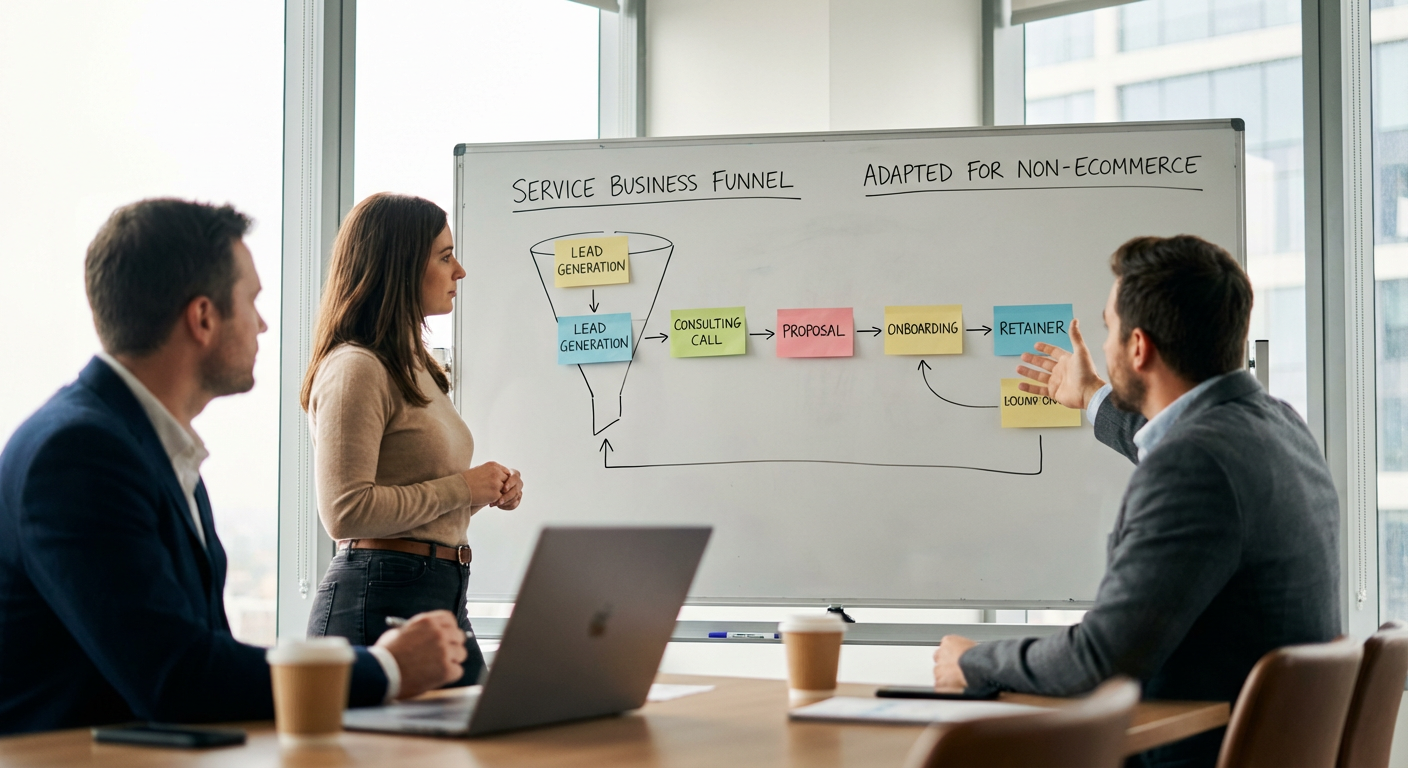
Tired of your service business feeling like a digital tumbleweed, blowing aimlessly across the vast plains of the internet? You’ve got skills, you’ve got passion, but turning leads into loyal customers feels about as easy as herding cats during a lightning storm.
Forget those cookie-cutter e-commerce models. Your service business isn't selling widgets; it's selling expertise, trust, and solutions. And for that, you need a funnel that’s as bespoke as your best client proposal.
The Myth of the "Generic" Service Funnel
Let's be brutally honest. The internet is awash with advice on "building your funnel." Most of it revolves around product-based businesses. Think abandoned carts, upselling digital downloads, and optimizing checkout pages. It's all well and good for online stores, but for the plumber, the consultant, the designer, or the therapist, it's like trying to fit a square peg into a round hole.
Many service businesses flail around, cobbling together a website that looks vaguely professional (often on platforms like Wix or Squarespace, which offer limited customization when you *really* need it) and then... crickets. They might have a contact form, maybe a blinking "Call Us Now!" button. But a funnel? They’re often missing the strategic roadmap that guides a potential client from an initial spark of interest to a signed contract or booked appointment.
This isn't about a fancy landing page; it's about shaping the entire client journey. It's about anticipation, demonstration of value, and a clear path to commitment. A service funnel isn't a salesy tactic; it's the architecture of trust and perceived value.
Deconstructing the Service Customer's Journey
Unlike an e-commerce purchase, where a customer might make an impulse buy based on a compelling image and a discount code, a service purchase is almost always driven by need, trust, and a careful evaluation of expertise. People buy *solutions* to problems, not just a promise of one.
Consider it in stages:
- Awareness: They have a problem they need solving. They might not know who you are yet, but they're actively (or passively) seeking answers.
- Consideration: They're researching solutions. They're comparing options, looking at different providers, and trying to understand what will work best for them. This is where your expertise shines.
- Decision: They've narrowed it down. They’re evaluating specific providers, looking for signs of credibility, understanding pricing, and anticipating the outcome.
- Action: They're ready to commit. This could be a consultation booking, a quote request, or a direct service agreement.
- Loyalty/Advocacy: They've experienced your service. They’re either thrilled and referring others, or... well, we don't even want to think about that.
Your service funnel needs to cater specifically to these psychological shifts. It's less about "add to cart" and more about "let's talk."
The Awareness Stage: Igniting the Spark
This is where potential clients realize they have a problem and start looking for solutions. They're not ready to buy, but they are ready to learn.
Your goal here is to be discovered and to position yourself as a credible source of information, not just another vendor shouting into the void. Generic blog posts about "why you need a great website" won't cut it. You need content that speaks directly to their pain points and offers insights.
Content That Connects (Not Just Clicks)
- Problem-Solution Articles: Instead of "What is plumbing?", try "Why is my hot water heater making that noise and what to do about it." This immediately addresses a specific, urgent problem.
- "How-To" Guides: For a web designer, this might be "How to Choose the Right Color Palette for Your Brand" or "5 Common Website Mistakes Small Businesses Make."
- Industry Insights: Share your expert perspective on trends or common misconceptions in your field. This establishes authority.
Think about where your ideal clients hang out online. Are they on LinkedIn, searching Google, or in specific industry forums? Your content needs to be there, providing genuine value *before* they even consider asking for a quote.
Avoid the trap of thinking a flashy homepage on a platform like GoDaddy is enough. It’s a digital storefront, yes, but it's not drawing people in with compelling reasons to explore further.
The Consideration Stage: Building Trust and Demonstrating Value
They know they have a problem, and they're starting to see you as a potential solution provider. Now, you need to prove you're the *best* solution. This is where value demonstration and credibility building are paramount.
This stage isn't about hard selling; it's about soft nudges and information exchange. People are comparing apples to apples, and you need to show them your apple is the juiciest, ripest, and most likely to solve their immediate cravings.
Show, Don't Just Tell
- Case Studies (Real Ones!): Instead of fabricated success stories, interview your actual clients. Highlight the problem they faced, how you solved it, and the measurable results they achieved. Focus on the transformation.
- Testimonials That Resonate: Go beyond "Great service!" Ask for specifics. "They helped me double my bookings" or "The clarity I gained from their consultation was invaluable."
- Detailed Service Pages: Don't just list services. Explain *what* you do, *how* you do it, and *why* your approach is superior. Use language that speaks to their needs.
- Free Resources: Offer downloadable checklists, templates, or in-depth guides that solve a smaller piece of their larger problem. This allows them to experience your expertise firsthand without commitment.
This is where **clear calls to action (CTAs)** that guide them to the next step become crucial. Not a generic "Contact Us," but "Download Your Free [Specific Guide]" or "Schedule a Free [Problem-Specific] Discovery Call."
The Decision Stage: Nailing the Proposal and Making it Easy
They're leaning towards you. They've seen your expertise, they trust your process, and now they need to understand the investment and feel confident in moving forward.
This stage is about clarity, transparency, and removing any lingering friction. The easier you make it for them to say "yes," the more likely they are to do so.
The Art of the Persuasive Proposal
- Customized Proposals: Generic proposals are red flags. Show you understand *their* specific situation and have tailored your solution.
- Transparent Pricing: While you might not list prices openly on your website (depending on service complexity), your proposals should be crystal clear. Break down costs, explain what's included, and outline your payment terms. Consider adding our [cost estimator](/tools/cost-estimator) as a transparent starting point for common services.
- Addressing Objections: Anticipate common concerns and address them proactively. This could be in your proposal, an FAQ section, or in direct communication.
- Next Steps: Make it abundantly clear what happens after they accept. What’s the onboarding process? What’s the timeline?
This is also where building rapport matters. A phone call or a quick video conference can solidify trust and answer any final questions far better than an email chain.
The Action Stage: Sealing the Deal (Without the Salesy Sweat)
They’ve decided. Now, how do you make it happen without making it feel like a high-pressure sales closing? For service businesses, the "action" isn't an online checkout; it's the commitment to begin the service.
- Clear Onboarding Process: Once they agree, the onboarding should be seamless. Provide them with exactly what they need to know and do.
- Simple Agreement/Contract: Ensure your contracts are clear, concise, and easy to understand. Use reliable tools for e-signatures.
- Confirmation & Gratitude: Acknowledge their commitment and express genuine appreciation.
The goal is to make the transition from prospect to client feel smooth, professional, and reassuring. You’ve guided them through the journey; now, you’re welcoming them to the next phase.
Post-Action: The Unsung Hero of the Service Funnel
This is where so many service businesses drop the ball. They get the client, deliver the service, and then… move on to the next lead. Big mistake.
The true power of a service funnel lies not just in acquisition, but in retention and advocacy. This is where your FunnelDonkey expertise truly shines in building relationships, not just transactions.
Nurturing Loyalty and Driving Referrals
- Consistent Communication: Keep clients informed throughout the service delivery.
- Exceptional Delivery: This goes without saying, but exceeding expectations is key.
- Follow-Up & Check-Ins: After the service is complete, check in. Ask for feedback. See if they need anything else.
- Solicit Reviews & Referrals: Once a client is delighted, don't be shy about asking for a review or if they know anyone else who could benefit from your services.
- Ongoing Value: Consider offering retainer services, ongoing support, or exclusive content to keep clients engaged and coming back.
A happy client who feels valued is your best marketing asset. They become your unofficial sales team, generating leads that are already pre-qualified and primed for trust.
Why Generic Platforms Fail for Service Funnels
We touched on this earlier, but it bears repeating. Platforms like Wix, Squarespace, and even standard GoDaddy websites are designed with broad appeal. They offer templates and drag-and-drop interfaces that are great for getting *something* online quickly. But they often lack the depth and flexibility required for a truly strategic service funnel.
- Limited Customization: You're often stuck with pre-defined structures that don't align with your unique client journey.
- Weak CRM Integration: Many lack robust tools to track leads, manage communications, and automate follow-ups effectively.
- Subpar SEO Capabilities: While they've improved, they often don't offer the granular control needed for advanced SEO strategies to attract high-intent service leads.
- Lack of Sophisticated Automation: Building complex, multi-step email sequences or conditional logic based on client behavior is often difficult or impossible.
These platforms are like a generic suit – it might fit okay, but it’s not tailored to your specific needs and won't make you stand out at the gala. You need a solution that allows for strategic depth, personalized client journeys, and robust tracking. You need **FunnelDonkey**.
Ready to Build Your Service Business Empire?
Stop letting potential clients slip through the cracks because your online strategy is too generic. A service funnel isn't an optional extra; it's the engine that drives consistent growth for your expertise-based business.
At **FunnelDonkey**, we don't do generic. We build bespoke, strategic funnels designed for service businesses, turning prospects into raving fans. We cut through the noise and build systems that attract, engage, and convert.
Ready to ditch the digital tumbleweeds and build a predictable client acquisition machine? Let’s talk about crafting a funnel that works as hard as you do.
Explore our premium pricing packages and discover how we can transform your online presence. Or, get in touch for a free strategy consultation. Let's build something extraordinary.