Plugin Overload: When Your WordPress Site Becomes a Frankenstein
Your WordPress site's a Frankenstein monster of plugins? Time to prune the limbs before it bites you!
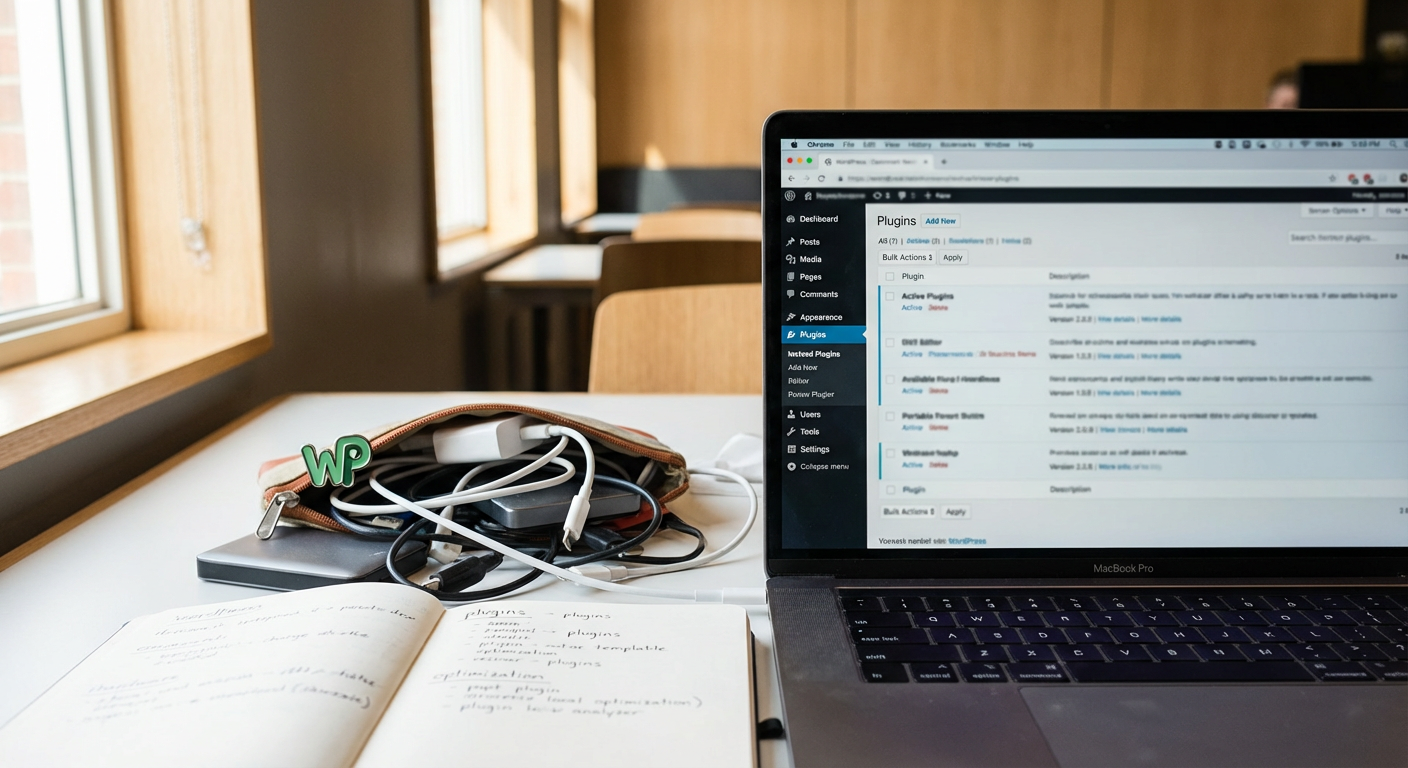
The Digital Frankenstein: How Too Many WordPress Plugins Are Haunting Your Website
So, you've built a WordPress site. Congratulations! You've got the keys to a kingdom of endless possibilities. But beware, because lurking in the shadows is a digital beast known as "plugin overload," and it's ready to turn your dream website into a monstrous, clunky mess.
We're talking about that creeping feeling where your site, once sleek and agile, has become a cobbled-together Frankenstein's monster of features, each plugin a stitched-on limb that's more likely to detach and cause chaos than add practical value. Ready to exorcise these demons?
The Allure of the "Just One More Plugin" Mentality
It starts innocently enough. You need a contact form? There's a plugin for that. Want to boost your SEO? Plugin. Need a slider that could rival the Grand Canyon in scale? Plugin again. Social media integration? You guessed it.
The WordPress plugin repository is a veritable candy store for website owners. Each shiny new add-on promises to solve a problem, enhance functionality, or inject a dose of "cool" into your digital presence. And for a while, it feels like you're building the ultimate website, one meticulously curated feature at a time.
But here's the brutal truth: while plugins are undeniably powerful, this "just one more" addiction is precisely how you end up with a site that's slower than dial-up internet in 1998, more prone to security breaches than a public Wi-Fi hotspot, and about as user-friendly as assembling IKEA furniture without the instructions.
Plugin Problems: More Than Just a Speed Bump
Let's be clear: not all plugins are created equal, and not every plugin is inherently evil. The problem arises when quantity trumps quality, leading to a cascade of detrimental effects that can cripple your online presence. This isn't just about minor annoyances; we're talking about core performance and security issues.
Think of your website like a high-performance race car. Each plugin is like adding a new accessory. A spoiler might look cool, a turbo might add power, but add too many unnecessary components, and suddenly your car is heavier, harder to steer, and consumes more fuel. Eventually, it just breaks down.
The Great Slowdown: How Plugins Siphon Your Site's Speed
This is the most common and often the most frustrating symptom of plugin overload. Every plugin you activate loads its own code, often with multiple scripts and stylesheets. Even if a plugin is "lightweight" on its own, when you stack 20, 30, or even 50 of them, the cumulative effect is a digital traffic jam.
- Database Bloat: Many plugins create their own tables or store excessive data in your WordPress database. This makes queries slower, impacting page load times.
- Script Conflicts: Incompatible JavaScript or CSS from different plugins can fight for dominance, leading to broken layouts and sluggish performance.
- Increased Server Load: More code means more processing power required from your web host. Cheap hosting plans buckle under this strain, leading to timeouts and errors.
Remember those earlier days when your site loaded in a blink? If it now takes longer to load than it does for your morning coffee to brew, plugins are likely prime suspects. In today's fast-paced digital world, slow load times are a death sentence. Users have the attention span of a gnat on a sugar rush, and they will bail faster than you can say "bounce rate."
Security Holes: The Gatekeepers of Your Digital Empire
Every plugin installed is a potential entry point for malicious actors. Think of them as small doors into your website. The more doors you have, the more opportunities there are for someone to try and pick the lock.
- Outdated Code: Developers update plugins to patch security vulnerabilities. If you're not diligent about updates (and many people aren't), you're leaving known backdoors wide open.
- Poorly Coded Plugins: Not all developers follow best security practices. A single vulnerable plugin, even if up-to-date, can compromise your entire site.
- Plugin Conflicts: In rare cases, plugin conflicts can expose security flaws that wouldn't exist otherwise.
This isn't just about losing some visitor data; it's about protecting your reputation, your customer trust, and potentially your livelihood. A hacked website can lead to data breaches, malware distribution, and complete website takedown. And unlike the pre-packaged solutions from platforms like Wix or Squarespace (which, while limited, do manage their core infrastructure), you're entirely responsible for the security of your WordPress installation.
The Fragile Ecosystem: When Updates Break Everything
WordPress itself is updated regularly for security and features. Themes get updated. And yes, plugins get updated. The more plugins you have, the more complex the web of dependencies becomes. An update to one plugin, or even WordPress itself, can easily break another plugin, leading to unexpected errors, broken layouts, or feature failures.
This "update anxiety" is a real thing for many WordPress site owners. You hold your breath every time you hit that update button, half-expecting something to go catastrophically wrong. This isn't a sustainable way to manage a business-critical asset like your website.
Beyond the Obvious: Hidden Costs of Plugin Overload
The damage isn't always immediately apparent. Sometimes, the negative impacts of too many plugins are subtle, slowly eroding your website's effectiveness and your business's bottom line.
The "DIY But Not Really" Treadmill
Many business owners opt for WordPress and a slew of plugins thinking they're saving money compared to a custom build. And in the short term, they might be. But the long-term costs can be staggering.
- Constant Tinkering: You'll spend more time troubleshooting conflicts, updating plugins, and researching new ones than you will on actual business development.
- Hidden Development Costs: When things inevitably break, you'll need to hire a developer to fix them, often at an emergency rate. This can quickly exceed the initial cost of a well-built site.
- Lost Opportunities: A slow, error-prone website that frustrates visitors translates directly into lost leads, lost sales, and damaged brand perception. Have you ever used our ROI calculator to see just how much those lost opportunities are costing you?
This isn't saving money; it's just delaying a larger expense. It's like trying to save money by patching up a leaky car with duct tape. It might work for a bit, but eventually, you'll need a real repair, and the damage might be worse.
The Generic Trap: Blending In, Not Standing Out
Every popular plugin comes with its own default styling and functionality. When you load up on common plugins, especially for things like sliders, forms, or galleries, your website starts to look like hundreds, if not thousands, of others. You lose the opportunity to create a truly unique brand experience.
While platforms like GoDaddy Website Builder or sometimes even Squarespace can feel restrictive for customization, WordPress's strength lies in its flexibility. But if you're simply using the default settings of every popular plugin, you're squandering that flexibility. Your website should reflect *your* unique brand, not the cookie-cutter output of a half-dozen popular add-ons.
The Solution: Curation, Optimization, and Strategic Development
So, what's the antidote to plugin overload? It's not about abandoning plugins altogether, but about being strategic and disciplined.
Audit Your Existing Arsenal
The first step is a brutal assessment of your current plugins. Be honest. Ask yourself:
- Do I really need this plugin?
- Does it perform a function that my theme or another plugin already handles?
- Is it actively maintained and regularly updated?
- Is it bloated or known to cause performance issues?
- Is there a more efficient, custom-coded solution that could replace multiple plugins?
Deactivate and delete any plugin you haven't used in months or that duplicates functionality. Then, test your site's speed and performance. You might be surprised at the immediate improvement.
Seek Out Leaner, More Efficient Alternatives
For common functions, explore plugins that are known for their lightweight architecture and performance. Look for plugins that:
- Have a small footprint.
- Are regularly updated with performance optimizations.
- Offer clear documentation and good support.
- Are well-reviewed by users who prioritize speed and efficiency.
Sometimes, one highly efficient, well-coded plugin can replace three or four less optimized ones.
Embrace Custom Development When Necessary
For many businesses, especially those in a competitive local market like St. George, Utah, a truly effective website requires more than just shuffling plugins. This is where custom development shines.
A skilled development team can:
- Build Core Functionality Natively: Instead of using plugins for contact forms, CTAs, or specific layout elements, custom code can integrate these seamlessly, reducing bloat and improving performance.
- Optimize for Speed and Security: Custom-built solutions are tailored to your specific needs, eliminating unnecessary code and potential vulnerabilities.
- Ensure Brand Consistency: Functionality and design are built to perfectly match your brand identity, not shoehorned into plugin templates.
- Focus on Your Specific Goals: Whether it's driving local leads through powerful local SEO strategies or facilitating online sales, custom development ensures your website directly supports your business objectives.
Don't just take our word for it. Use our cost estimator to get a rough idea of what a strategically built website might cost, and compare that to the ongoing, often hidden, costs of maintaining a plugin-laden Frankenstein.
The FunnelDonkey Approach: Building Bionic Websites, Not Digital Monsters
At FunnelDonkey, we see too many websites hobbled by the "more is more" approach to plugins. It's a path that leads to frustration, wasted resources, and ultimately, underperforming digital assets. We believe in building websites that are not only beautiful and functional but also remarkably fast, secure, and efficient.
We don't just slap plugins onto your site and call it done. We meticulously curate additions, optimize existing code, and develop custom solutions when plugin-based approaches fall short. Our goal is to create a streamlined, high-performance website that works *for* your business, not against it.
Stop wrestling with a website that feels like a patchwork quilt of half-baked features. It's time to invest in a digital asset that's engineered for success. If your WordPress site is becoming a monster you can't control, or if you're looking to build a new site from the ground up without falling into the plugin trap, let's talk.