How Google Actually Ranks Local Businesses in 2025
Alright, let's cut the crap. You’re a business owner in St. George, Utah, probably wrestling with this damn Google ranking stuff. You’ve heard the buzzwords, you’ve seen the clickbait headlines, and y
Alright, let's cut the crap. You’re a business owner in St. George, Utah, probably wrestling with this damn Google ranking stuff. You’ve heard the buzzwords, you’ve seen the clickbait headlines, and you’re tired of being fed the same tired, generic advice that sounds like it was written by a beige cardigan-wearing AI. Well, buckle up, buttercup, because we’re about to peel back the digital curtain and tell you **how Google actually ranks local businesses** in 2025. And trust us, it’s probably not what the gurus are peddling.
We’re FunnelDonkey, by the way. We do premium web design and SEO in this very city. We’re not here to sell you snake oil; we’re here to deliver results so tangible you could use them to prop open a door. And since you’re probably drowning in a sea of mediocre information, we’re going to give you the unvarnished truth about what actually moves the needle.
Forget the "Secret Sauce" – Google Wants a Damn Good Experience
The first thing you need to internalize is that there's no arcane secret handshake with Google’s algorithm. It’s not some ancient riddle guarded by digital druids. At its core, Google wants to show its users the best damn results for their queries. For local businesses, that translates into showing the most relevant, trustworthy, and user-friendly options right when someone needs them.
Think about it from Google’s perspective. If it shows a bunch of spammy, outdated websites for a local search, people get frustrated. They leave. And a frustrated user means a broken Google. They are ruthlessly incentivized to get it right, and the better they get, the harder it is for businesses that aren't playing the game properly.
So, before you start obsessing over a mythical ranking factor, focus on the foundational elements that scream "this business is legit and helpful." Everything else is just garnish.
The Holy Trinity: Relevance, Proximity, and Prominence (It's Not That Complicated)
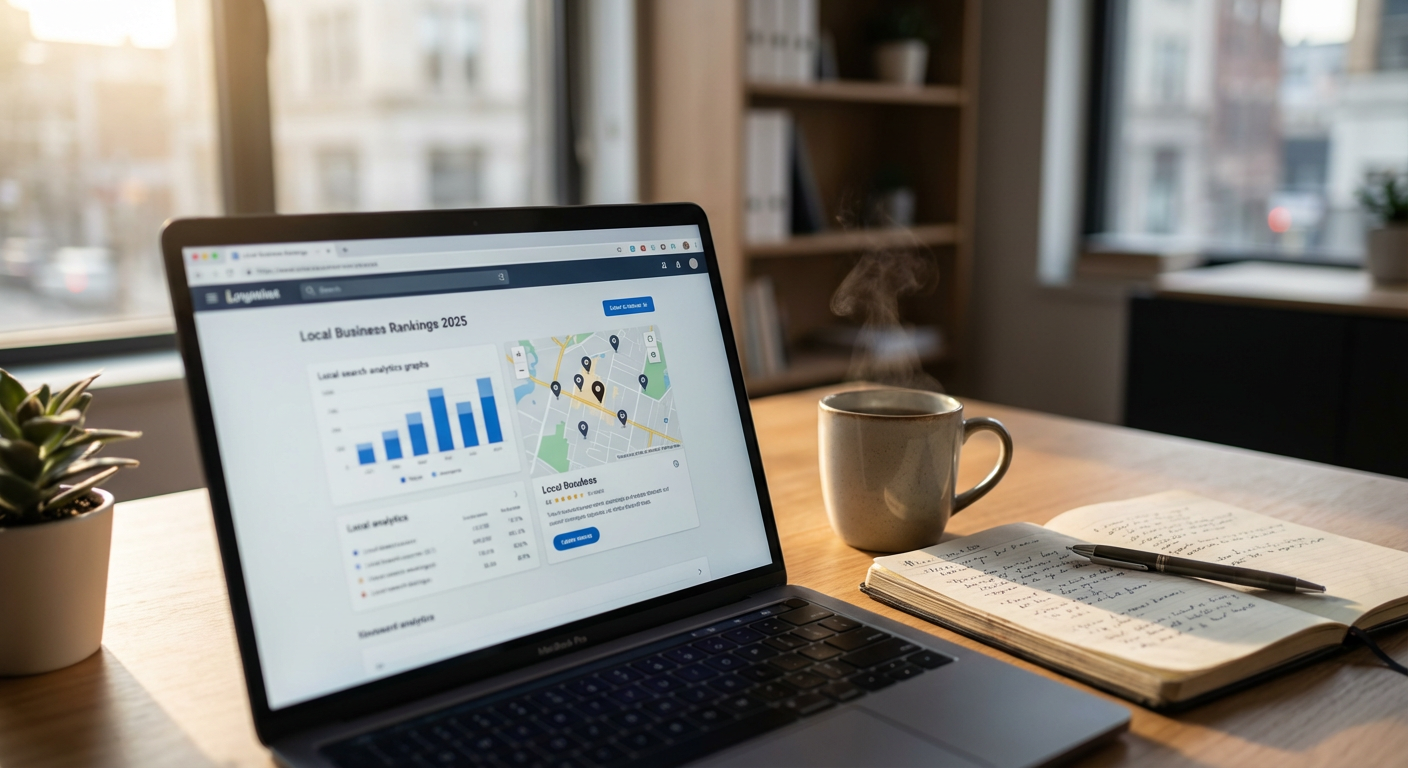
Google’s Local Pack, that coveted map and three business listings that appear for most local searches, is driven by a surprisingly straightforward, albeit complex in execution, set of factors. Think of it as a three-legged stool. If one leg is wobbly, the whole thing topples.
Relevance: Are You Actually What They're Looking For?
This is where your digital storefront needs to be crystal clear. If someone searches "best pizza in St. George," Google needs to see that your business *is* a pizza place, *located* in St. George, and *serves* pizza. Revolutionary, right?
More than just keywords on your homepage, relevance is about the depth and breadth of your content. Are you talking about the specific services you offer? Do you have detailed pages explaining what you do? Are these descriptions accurate and informative? If you’re a plumber, don’t just say "plumbing services." Detail your pipe repair, drain cleaning, water heater installation – the works. Google notices that.
A poorly optimized website, one that’s vague or misleading, is a red flag for Google. It’s like showing up to a job interview in pajamas – unprofessional and unconvincing. This is why investing in robust web design in St. George is non-negotiable.
Proximity: Where the Heck Are You?
This one’s a no-brainer, but surprisingly still gets botched. Google generally prioritizes businesses that are geographically close to the searcher. This is why "distance" is a key consideration.
If you’re running a business in St. George, your digital signals need to scream "St. George." This means having your address clearly listed on your website, in your Google Business Profile, and across relevant online directories. It’s about reinforcing your local identity.
However, proximity isn't just about being physically near. Google also uses IP addresses and location history. So, while you can't physically move your business closer to every searcher, you *can* make sure your online presence is undeniably local.
Prominence: Are You a Big Deal (Online)?
This is where things get a little less about brute force and more about reputation and authority. Prominence is about how well-known and reputable your business is online. It’s a measure of your digital "buzz."
Think of it like this: If two pizza places are equally relevant and close, which one does Google show? Probably the one that people are talking about, reviewing, and linking to. This is where elements like online reviews, mentions in local news, and backlinks from other reputable websites come into play.
Google sifts through vast amounts of data to gauge this prominence. It's not just about vanity metrics; it's about genuine indicators of trustworthiness and authority. This is precisely why our SEO services are designed to build genuine, sustainable prominence for our clients.
Google Business Profile: Your Local Business's Digital Soapbox
If you’re not treating your Google Business Profile (GBP) like it's the most important piece of real estate on the internet, you’re leaving money on the table. This ain’t your grandpa’s Yellow Pages listing. This is your direct line to local searchers, and Google obsesses over it.
Here’s the brutal truth: a neglected GBP is a death sentence for local rankings. You need to be active, accurate, and engaging. This means:
- Complete and Accurate Information: Every single field filled out. Correct name, address, phone number (NAP), hours of operation (even holiday hours!), website URL. Consistency is king.
- Photos and Videos: High-quality, professional images and videos of your business, products, and services. Show people what they'll experience.
- Reviews: Actively solicit reviews from happy customers and, crucially, respond to *all* of them – positive and negative. This shows you're engaged and care.
- Posts: Use the GBP posts feature to share updates, offers, events, and new products. Think of it as mini-blog posts for your local listing.
- Q&A: Answer questions potential customers are asking. If a question isn't there, proactively add one and answer it yourself!
Your GBP isn’t just a listing; it’s a mini-website within Google's ecosystem. Optimize it relentlessly. A well-optimized GBP directly impacts **how Google ranks local businesses** by feeding it crucial, verifiable local information.
Reviews and Ratings: The Digital Word-of-Mouth on Steroids
Let's be blunt: people trust peer reviews more than they trust your own marketing copy. And Google knows this.
The quantity, quality, and recency of your reviews are massive ranking signals. Businesses with more positive reviews tend to outrank those with fewer, even if the latter are arguably better in some subjective way. It's about observable social proof.
Google's algorithm is basically a highly sophisticated digital bouncer. It wants to let in the most popular, well-behaved guests. Reviews are your ID and your popularity contest rolled into one.
Don't be that business that's afraid of a few negative reviews. Every business gets them. What matters is how you handle them. A timely, professional, and empathetic response to a negative review can actually be more powerful than a hundred glowing ones. It shows you're human, you're accountable, and you're committed to customer satisfaction.
This is why we constantly evangelize the importance of reputation management as part of a comprehensive SEO strategy.
On-Page Optimization: It's Still Your Website's Job
While GBP and reviews are king for local search visibility, your own website still plays a crucial role. Think of it as the foundation upon which your local authority is built.
Here's a brutal truth: If your website is a loading dumpster fire, no amount of GBP optimization will save you. Google’s algorithm is sophisticated enough to detect a frustrating user experience.
This means paying attention to the basics, but doing them exceptionally well:
- Relevant Content: Go deep on your services. Embed relevant keywords naturally within your copy. Create dedicated pages for key offerings.
- Mobile-Friendliness: If your site looks like a brick on a smartphone, you're dead. Google made mobile-first indexing a thing for a reason.
- Page Speed: Nobody waits for a slow-loading website. Ever. If your pages crawl, users bounce. Google notices. Check out why page speed matters more than you think for SEO.
- Schema Markup: This is technical, but it's basically telling Google *exactly* what’s on your page in a language it understands. Local business schema is vital.
- Clear Calls to Action: Make it obvious what you want visitors to do – call, book an appointment, visit your store.
Your website needs to be a seamless, informative, and user-friendly experience. If you're not sure where to start, our On-Page SEO Checklist for Small Businesses is a solid starting point.
Beyond the Basics: What Else Moves the Needle for Local SEO?
So, you’ve got a killer GBP, a mountain of positive reviews, and a website that loads faster than a cheetah on espresso. Where do you go from here? Well, this is where things get interesting.
Local Citations and NAP Consistency
These are mentions of your business name, address, and phone number (NAP) across the internet. Think online directories, industry-specific sites, and local business listings. The key here is consistency: the NAP information must be identical on every single platform.
Inconsistent citations create confusion for Google and can drag down your rankings. It’s like having multiple versions of your name – which one is the *real* you?
Backlinks – The Old Faithful, But With a Local Twist
Yes, backlinks are still a massive deal. But for local SEO, the *quality* and *relevance* of those links matter more than ever. A link from a local St. George blog, a prominent Chamber of Commerce website, or a local news outlet is far more valuable than a link from a generic, unrelated site.
Think about it: if other local entities are vouching for you, Google sees you as a legitimate, integrated part of the local business community. This builds authority and trust.
User Behavior Signals – The Invisible Hand
This is where things get a little more abstract, but it's crucial to understand. Google watches how users interact with search results. Things like:
- Click-Through Rate (CTR): How often are people clicking on your listing when it appears?
- Dwell Time: How long do users stay on your website after clicking through?
- Bounce Rate: How quickly do users leave your site without interacting further?
- Conversions: Did they complete the action you wanted them to? (e.g., fill out a form, make a call).
These are all signals that tell Google whether your listing and website are meeting user intent. A high CTR means your title and description are compelling. Good dwell time and low bounce rates indicate your content is relevant and engaging. Conversions are the ultimate validation.
This is why understanding user journeys and optimizing your entire funnel is so important. It's not just about getting found; it's about getting *chosen* and having the user *act*. This is the essence of why every business will need a funnel by 2026.
The Relentless Pursuit of a Great User Experience
If there's one overarching theme to **how Google ranks local businesses** in 2025 and beyond, it's this: Google is obsessed with providing the best possible user experience.
This means being:
- Relevant: You offer exactly what the user is looking for.
- Trustworthy: Your online presence is accurate, legitimate, and backed by positive social proof.
- Accessible: Your website is easy to find, navigate, and use, especially on mobile.
- Engaging: You provide valuable content and encourage interaction.
Trying to game the system with black-hat tactics is a fool's errand. Google’s algorithm is too sophisticated, and their penalties are too severe. The path to sustainable, top rankings is paved with genuine value and a commitment to serving your local customers.
At FunnelDonkey, we don't deal in guesswork or wishful thinking. We focus on building websites and implementing SEO strategies that are designed to meet these criteria head-on. We understand the St. George market and what it takes to stand out.
Ready to stop guessing and start ranking? Let’s have a conversation. We can help you understand your potential and measure your expected return. Use our ROI calculator to get a glimpse, then reach out to us to make it a reality.
Get in touch with FunnelDonkey today!
View our pricing and get a custom quote!