Google Maps SEO: Beyond the Basics
Unleash your local domination in Google Maps! We're ditching the weak sauce and diving into advanced tactics that'll get you noticed.
Your Business vs. The Local Search Algorithm: A St. George Showdown
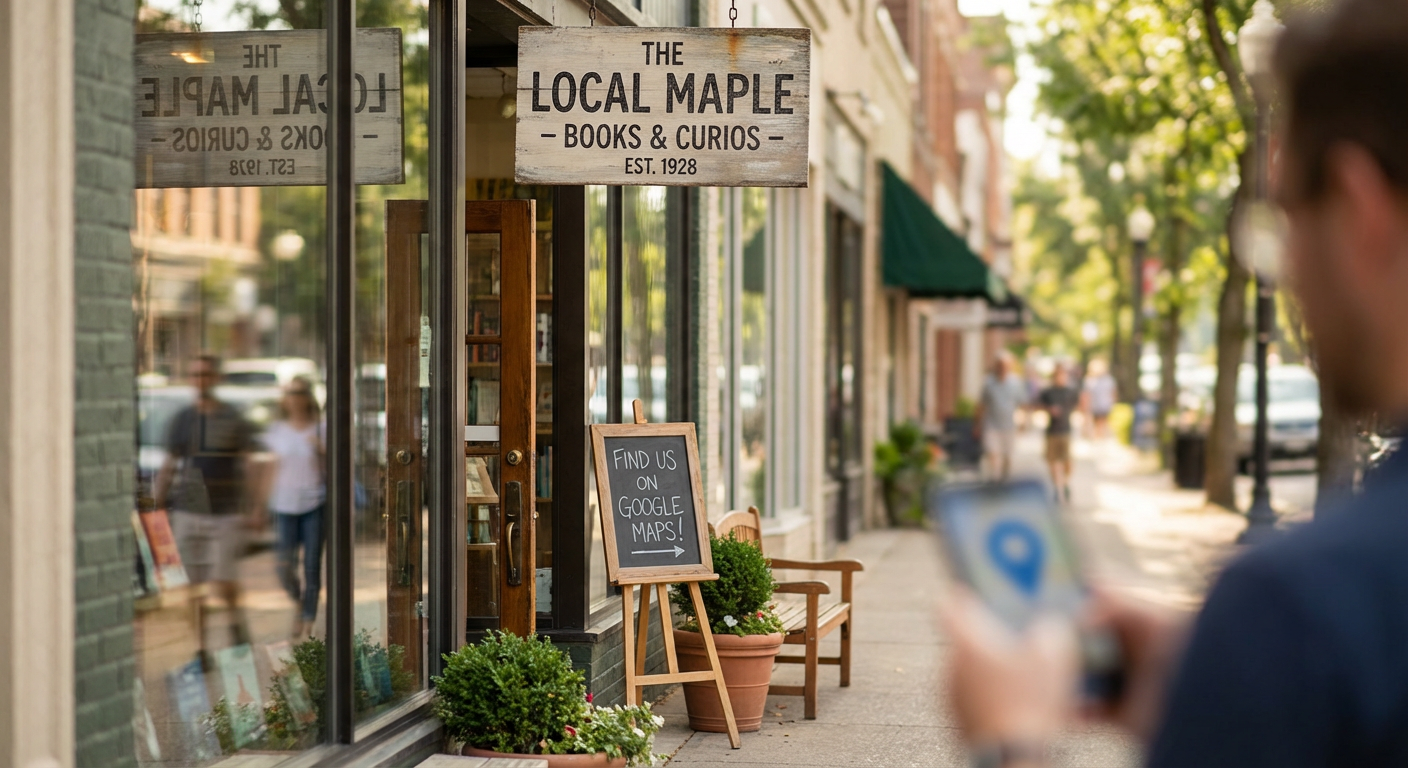
So, your business is nestled somewhere in scenic St. George, Utah – a place where red rocks meet entrepreneurial spirit. You’ve got a killer product or service, but when local folks whip out their phones to find exactly what you offer, your business plays hide-and-seek with Google Maps like a shy lizard behind a sandstone outcrop. If your Google Maps SEO strategy is just a prayer and a pin drop, it's time for a wake-up call. We're not talking about the digital equivalent of shouting into the void; we're talking about dominating the local map pack.
Why "Good Enough" Maps SEO Is Really Just "Screwed Enough"
Let's cut the fluff. Many businesses treat Google Maps SEO like a secondary thought, a digital garnish. They might create a basic profile and assume the magic happens automatically. Spoiler alert: it doesn't. Google's algorithm for the map pack is far more sophisticated than a simple directory listing. It's a complex beast that prioritizes businesses it deems most relevant, authoritative, and those that offer the best user experience. Thinking your website, built on a platform like [Wix](/blog/wix-vs-wordpress) or [Squarespace](/blog/squarespace-vs-wordpress), is enough to carry your local map ranking is like bringing a spork to a steak knife fight. It might do *something*, but it's hardly going to win you any culinary awards.
This isn't about being perfect; it's about being noticeably better than the competition drowning in generic listings. It’s about understanding that local search is a battlefield, and the map pack is prime real estate. If you’re not fighting for it, you’re conceding the win to businesses that are.
The Pillars of Map Pack Dominance
Think of Google Maps SEO not as a single task, but as a three-legged stool. If one leg is wobbly, the whole thing tips over. We're talking about:
- Signals of Relevance: How closely does your business match what the user is searching for?
- Signals of Prominence: How well-known and authoritative is your business both offline and online?
- Signals of Proximity: How close is your business to the searcher's location? (This is the one you have the least control over, but the other two make it ridiculously overpowered.)
We specialize in leveraging the signals you can control, turning your St. George business into the local search titan it deserves to be. Forget scraping by; let's aim for the top spot.
Optimization Beyond the "Set and Forget" Profile
Most businesses create a Google Business Profile (GBP), slap in their address and phone number, maybe upload a few photos, and then consider it "done." This is the digital equivalent of setting up a lemonade stand with no sign and hoping thirsty passersby magically appear. Google Business Profile optimization is an ongoing process, a continuous refinement that signals to Google that your business is active, engaged, and deserves top billing.
The Nitty-Gritty of Your GBP: More Than Just Pretty Pictures
Your Google Business Profile isn't just a digital billboard; it's a dynamic platform. Here’s where the real work happens:
- Category Accuracy: This is non-negotiable. Are you listing yourself as a "Restaurant" when you're actually a "Bar & Grill" or a "Specialty Coffee Shop"? Google uses your primary category to understand what you do. Be specific. If your business offers multiple services, ensure you’re using secondary categories wisely to capture related searches.
- NAP Consistency is King (Still): Name, Address, Phone Number. This trio needs to be identical across your website, your GBP, and every other online directory. Mismatches create confusion for both users and Google, subtly damaging your authority and maps ranking. If your website is on a platform like [GoDaddy](/blog/godaddy-vs-bluehost) where you might have made quick edits without a grand strategy, now's the time to audit.
- High-Quality, Optimized Photos & Videos: Generic stock photos won’t cut it. Upload high-resolution images of your storefront, interior, products, services in action, and your team. Use descriptive file names that include relevant keywords (e.g., "St-George-UT-pizza-delivery.jpg"). Videos are increasingly important for engagement – think a quick tour of your shop or a demo of your service.
- Detailed Business Description: Don't write a novel, but don't be stingy either. Weave in relevant keywords naturally, highlight your unique selling propositions, and tell people why they should choose you. Think about the questions a potential customer might ask and answer them right here.
- Leverage Q&A (Proactively): The Q&A section is a goldmine. Anticipate frequently asked questions and post them yourself, then answer them thoroughly. This demonstrates expertise and provides immediate value to potential customers browsing your profile.
Services & Products: Show Them What You Got
Google wants to know what you offer. Don't just have a vague "Services" section. List your specific services and products, complete with descriptions, prices (if applicable), and direct links to those pages on your website. This is crucial for matching specific search queries. If someone searches "emergency plumbing St. George," and you've listed "24/7 Emergency Plumbing Services" with a description and link, you're golden.
Reviews: Your Digital Word-of-Mouth Avalanche
Let's be blunt: fake reviews are digital poison. They’re unethical, they erode trust, and Google’s algorithm is getting scarily good at sniffing them out. Authentic reviews, on the other hand, are the lifeblood of local SEO. They’re a powerful ranking factor and, more importantly, they’re what prospects rely on when making a purchasing decision.
Your goal isn't just to collect reviews; it's to cultivate a healthy ecosystem of positive feedback that Google trusts.
Cultivating a Review Goldmine
- Ask, Ask, Ask (Professionally): Don't be shy. Train your staff to ask for reviews at the point of sale or service completion. Make it easy by providing a direct link to your Google review page. Consider a follow-up email with a polite request.
- Respond to EVERYTHING: This is crucial. Acknowledge positive reviews with a genuine thank you. For negative reviews, respond promptly, professionally, and empathetically. Show that you care about customer satisfaction and are willing to address concerns. This demonstrates excellent customer service and can even mitigate the damage of a negative review for future readers.
- Encourage Specificity: Vague reviews like "Great service!" are less helpful than "I loved how John fixed my leaky faucet quickly and explained everything clearly." Encourage customers to mention specific staff members or aspects of their experience.
- Don't Bribe: Offering discounts or freebies in exchange for reviews is a big no-no. Google frowns upon it, and it kills authenticity.
Think of your reviews as social proof on steroids. When your GBP is bombarded with genuine, positive feedback, it sends a powerful signal to Google: "This business is loved. Rank it higher."
Local Citations: Building Your Digital Footprint
While Google is king, it doesn't operate in a vacuum. Local citations are essentially mentions of your business's NAP (Name, Address, Phone Number) on other reputable websites, like industry directories, local business listings, and review sites. These act as an independent verification of your business's existence and legitimacy.
If your business is only listed on Google, you look like a lone wolf. If you're listed across a diverse range of authoritative online platforms, you look like a well-established pack member.
Choosing Your Citation Allies Wisely
Not all citations are created equal. Dodgy, irrelevant directories can actually hurt your efforts. Focus on:
- Major Aggregators: Data aggregators like Infogroup, Acxiom, and Foursquare are foundational.
- Industry-Specific Directories: If you're a dentist, you want to be listed on dental association sites. If you're a roofer, hit up roofing contractor directories.
- Local Directories: Think St. George Chamber of Commerce, local news sites with business sections, etc.
- Review Sites: Yelp, Facebook, Yellow Pages, etc.
Consistency is paramount. Every single NAP listing must be identical. A fragmented digital footprint confuses Google and weakens your authority. This is where many businesses that rely on DIY website builders like [Wix](/blog/wix-vs-wordpress) or even those using less structured setups from providers like [GoDaddy](/blog/godaddy-vs-bluehost) falter – they often have inconsistent or missing citations across the web.
We help St. George businesses identify and claim their most impactful citations, ensuring a strong and consistent digital presence that bolsters their Google Maps SEO efforts.
Website Authority: The Unsung Hero of Local Map Ranking
This is where many St. George businesses fall flat. They think a basic website, perhaps hosted on a generic platform like [Squarespace](/blog/squarespace-vs-wordpress) or even a templated WordPress site, is enough to support their local map efforts. It’s not. Google sees your website as a primary source of information and authority. A weak website will drag down your local map ranking, no matter how polished your GBP is.
Your website needs to:
- Be Mobile-First & Fast: Most local searches happen on mobile. If your site loads slower than molasses on a smartphone or is a pain to navigate, Google (and your customers) will bounce.
- Contain Location-Specific Content: Write blog posts, create landing pages, and develop service pages that are geographically relevant. Mention St. George, surrounding neighborhoods, and local landmarks. Answer local questions.
- Have Clear NAP Information: Your NAP should be prominently displayed on your website, ideally in the header or footer, and on a dedicated contact page.
- Build Topical Authority: If you offer plumbing services, your site should be a comprehensive resource on plumbing – not just a landing page with a phone number.
Think of your website as your digital headquarters. If your HQ is a shack, how can you expect to command a prime position on the digital map?
We craft websites that are not only visually stunning but are also technical powerhouses, built to support and amplify your local SEO efforts. This means better rankings, more qualified leads, and a stronger overall brand presence. You can get a rough idea of what investing in a powerful website might look like using our [cost estimator](/tools/cost-estimator).
Beyond the Basics: What the Pros Do Differently
St. George is a competitive market. The businesses sitting at the top of the local map pack aren't there by accident. They're implementing advanced strategies that go beyond the surface level.
Geotagging and Local Schema Markup: Speaking Google's Language
While not a direct ranking factor for the map pack itself, structured data (Schema Markup) and geotagged images on your website provide explicit clues to Google about your business’s location and services. Think of it as providing Google with a cheat sheet.
- LocalBusiness Schema: This tells Google details like your business type, address, contact info, opening hours, and even specific services offered, in a machine-readable format.
- Geotagged Images: Embedding GPS coordinates into your photos tells Google exactly where that image was taken, further reinforcing your local presence.
This level of technical optimization is often overlooked by those on platforms like [Wix](/blog/wix-vs-wordpress) or basic [GoDaddy](/blog/godaddy-vs-bluehost) setups due to platform limitations or a lack of technical expertise.
Local Link Building: Earning Trust Through Local Connections
Links still matter, especially local ones. Earning backlinks from other reputable St. George businesses, local news outlets, community organizations, or even local event sponsorships sends powerful signals of local relevance and authority.
- Sponsoring a local Little League team? You'll likely get a link from their website.
- Participating in a St. George community event? Look for mentions and links.
- Partnering with a complementary local business? Discuss reciprocal links where appropriate.
These aren't just vanity metrics; they are tangible indicators to Google that your business is an active, valued part of the local St. George community.
The Cost of Not Optimizing: Your Lost Revenue
Let's talk numbers, because at FunnelDonkey, we're about ROI, not just vanity metrics. Every position you miss in the local map pack is a potential customer who chose your competitor. It's lost revenue. It's a missed opportunity. Using our [ROI calculator](/tools/roi-calculator), you can start to Guesstimate just how much revenue you might be leaving on the table by not ranking effectively in local searches.
Investing in proper Google Maps SEO isn't an expense; it's a strategic investment in acquiring new, highly qualified local customers. It's about ensuring that when someone in St. George searches for what you offer, you're the first business they see.
Ready to Own the St. George Map Pack?
Stop letting your business blend into the digital background. If your Google Maps SEO efforts feel like a gamble, or if you're tired of losing customers to competitors who simply have a better online presence, it's time for a change. At FunnelDonkey, we're not about generic solutions. We’re about building powerful, data-driven local SEO strategies that get St. George businesses noticed, trusted, and chosen.
We understand the St. George market and we know what it takes to dominate local search. Ready to stop being a digital wallflower and start being the local search superstar you deserve to be?
Let's Talk About Dominating Your Local Market