Footer Design: The Most Underrated Conversion Zone
Don't let a wimpy footer lose you sales! It's prime real estate, so make it work for your funnel, partner!
November 13, 2025 6 min read
Footer Design: The Most Underrated Conversion Zone
Let's be honest, most website footers are the digital equivalent of that dusty box of forgotten Christmas decorations in your attic. Full of stuff you _might_ need someday, but mostly just taking up space. You scroll past it, barely a glance, and move on to the "real" content. What if I told you that this often-ignored real estate is actually a goldmine of conversion potential? A place where lost visitors can find their way, and interested prospects can take that crucial next step.Why Your Footer is More Than Just an Afterthought
You've spent weeks, maybe months, crafting the perfect homepage. Every word, image, and button is meticulously placed to guide your user down the path you’ve so brilliantly designed. But then, they reach the bottom of the page. What happens? For too many websites, it's a dead end. A jumble of links, copyright notices, and maybe a sad, lonely social media icon. This is where the magic – or the missed opportunity – happens. A well-crafted website footer isn't just a place to hide your sitemap; it's a strategic tool. It’s your digital handshake after the main conversation, offering resources, building trust, and subtly nudging visitors towards a conversion. Think of it as the exit strategy for your user’s journey, and a very clever one at that.The Pillars of a Powerful Footer: What Actually Matters
Forget stuffing your footer with every single link known to humankind. That’s the digital equivalent of shouting at someone in a crowded room. Instead, focus on what your user *actually needs* when they’ve reached the end of a page. We’re talking about utility, trust, and a gentle nudge. Here’s what to prioritize: * Essential Navigation Reinforcement: Don’t make users scroll all the way back up. Key links like "Contact Us," "About Us," and your primary services should be easily accessible. * Trust Signals: This is crucial. Think about what makes *you* feel comfortable doing business with someone online.- Privacy Policy & Terms of Service: Essential for legal compliance and building confidence.
- Certifications & Accreditations: If you have them, display them proudly. They’re visual proof of your credibility.
- Awards & Recognitions: Similar to certifications, these are social proof that screams "we're legit."
- Phone number
- Email address
- Physical address (if applicable)
- A link to book a consultation
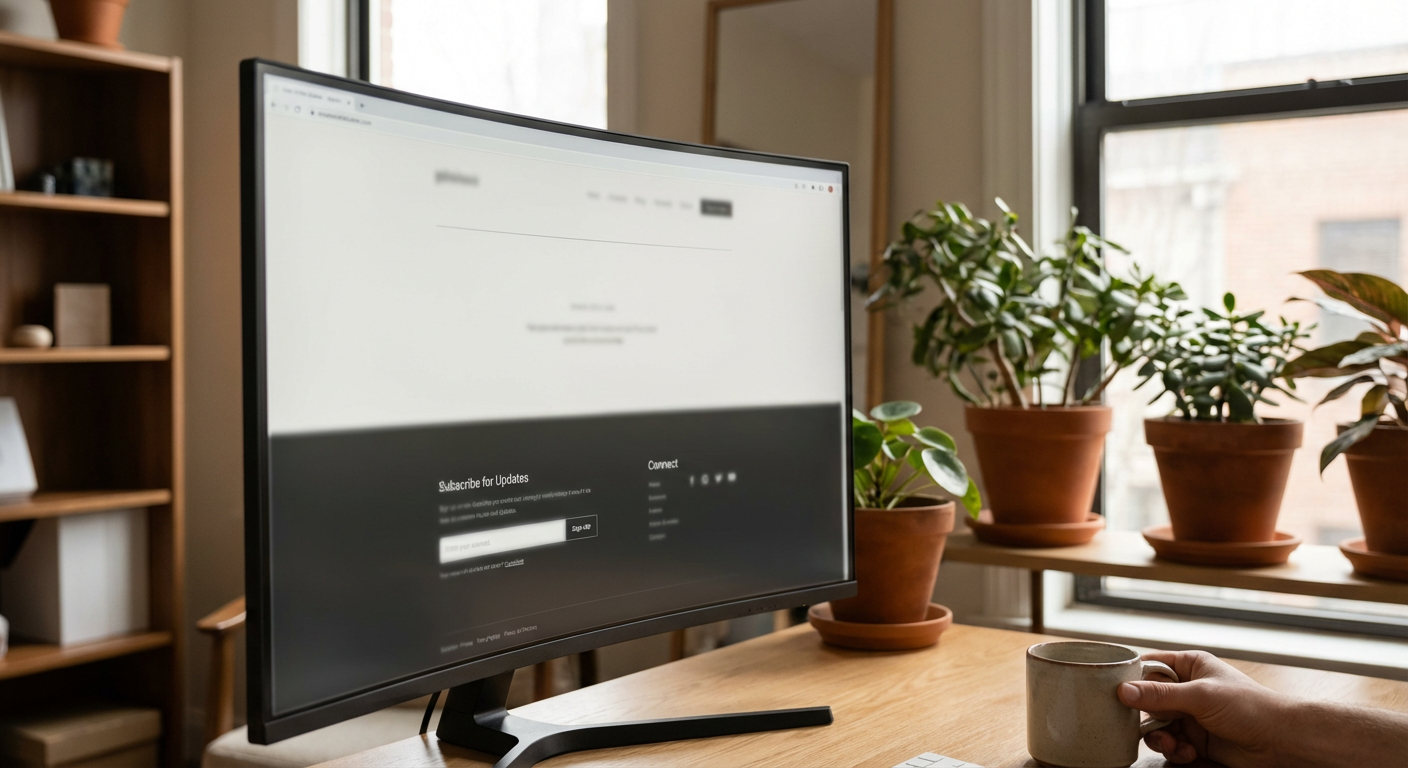
- A prompt for newsletter sign-ups
- A CTA to view your [pricing packages](/pricing)
Beyond the Basics: Value-Added Elements
Once the essentials are covered, consider adding elements that provide extra value without cluttering the experience. * Sitemap: For larger sites, a sitemap link can be a lifesaver for users trying to navigate complex information architecture. * Recent Blog Posts: Keeps the content fresh and encourages further engagement. * Testimonials Snippets: A brief, impactful quote can reignite interest. * Social Media Links: Make sure they’re clearly distinguishable icons and not just text.The Ghost of Bad Footers Past: What *Not* To Do
Let’s talk about the website builders that often lead people astray. Wix, Squarespace, and GoDaddy have their place, but they can also foster a "set it and forget it" mentality, especially with their default footer templates. * The "Everything But the Kitchen Sink" Approach: We’ve all seen them. Footers a mile long, crammed with every page, every service variation, every obscure link. It’s overwhelming and dilutes the impact of truly important information. This is the opposite of optimization. * The "Wix Default" Blandness: That generic footer that screams "I used a template and didn't customize." It’s a missed branding opportunity and often lacks crucial informational elements. Just because it’s there doesn’t mean it’s *working*. * The "Hidden in Plain Sight" Evasion: Making your contact info, privacy policy, or crucial service links so small and grey they require a magnifying glass and a treasure map. If it’s important, make it findable. * The "Outdated Information" Time Warp: An old copyright year, broken links, or outdated service mentions. This erodes trust faster than a poorly written blog post.Footer Optimization: Turning Clicks into Conversions
Optimization is about making things work *better*. For your footer, this means turning it from a passive repository of links into an active participant in your conversion funnel. How? By being intentional.- Strategic CTAs: Instead of a generic "Contact Us," try "Get Your Free Quote," or "Download Our Case Study." Make the next step clear and enticing. This is where you can really leverage your [custom web design](/services/web-design) to make these stand out.
- Link Audit: Regularly review every link in your footer. Are they still relevant? Are they working? Are they leading users where you want them to go?
- Mobile Responsiveness: This cannot be stressed enough. A footer that looks like a jumbled mess on a phone is a death knell. Ensure it’s clean, organized, and easy to tap.
- Visual Hierarchy: Use font size, weight, and spacing to guide the eye. What do you want people to see first? Second? Third?
- Brand Consistency: The footer should reflect your brand’s look and feel, just like the rest of your site. It's part of the overall user experience.