Construction Company Websites: Build Trust Before You Build
Your website isn't just a digital brochure; it's the foundation for trust! Let us help you build it right, earning clients before the first nail is ever hammered.
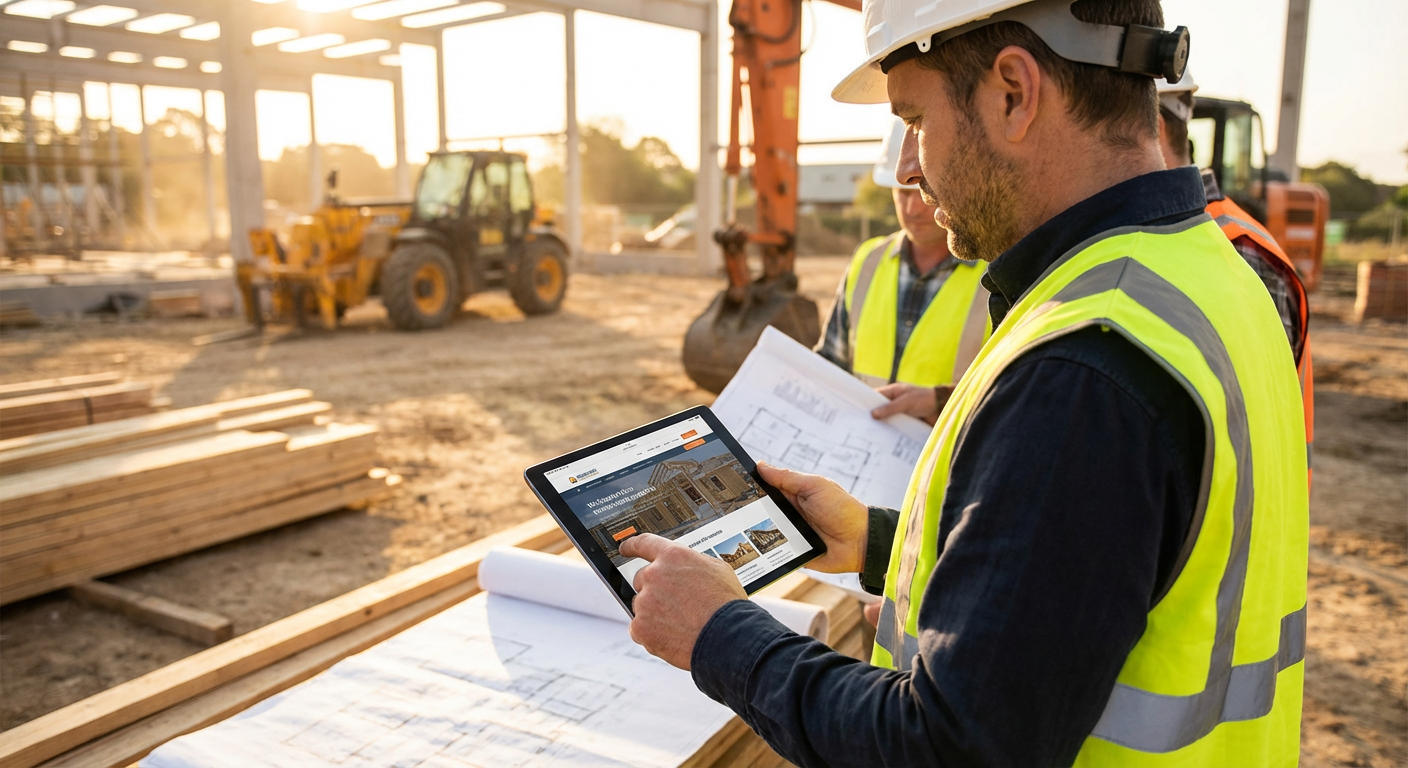
The Foundation of First Impressions: Why Your Construction Website Isn't Just a Digital Brochure
Let’s be honest. When a potential client is looking for a builder, they’re not just searching for a company that can slap up walls. They’re searching for a partner, someone they can trust with their dream project, their biggest investment. And where do they start that search? Almost always, online. Your construction website is no longer an afterthought; it's the digital bedrock upon which your entire reputation is built.
Think of it this way: you wouldn't show up to a client meeting with sawdust still on your work boots and a half-eaten sandwich in your hand. So why are so many construction companies relying on websites that look like they were built with a hammer and a prayer?
Beyond the Basic: What a Killer Contractor Web Design Actually Does
We're not talking about a pretty picture gallery and a vague "About Us" page. A truly effective construction website is a strategic powerhouse. It’s designed to do a few critical things:
- Attract the Right Leads: Not just anyone, but the clients who value quality, understand the investment, and are ready to move forward.
- Build Unshakeable Trust: Instill confidence from the first click, making them feel secure in choosing *you*.
- Showcase Your Expertise: Prove you’re not just contractors, but *craftsmen* with a proven track record.
- Differentiate You from the Noise: Stand out from the sea of generic, look-alike websites that plague the industry.
- Drive Action: Guide visitors towards a consultation, a quote, or a call – turning passive browsers into active prospects.
If your current site is ticking boxes on a “check the basic requirements” list, it’s probably failing at the really important stuff. It’s time for an upgrade.
The "Too-Cool-For-School" Trap: Why DIY Website Builders Often Fail Contractors
We see it all the time. The well-intentioned contractor, strapped for time and budget, decides to whip up a website on Wix, Squarespace, or GoDaddy. Sure, these platforms are accessible. They’re like pre-fab walls – easy to put up, but rarely a perfect fit and often lacking structural integrity for serious business.
The problem isn't the user-friendliness; it's the lack of specialized strategy. These builders are generalists, designed for everyone from local florists to online boutiques. They offer templates that, while perhaps visually appealing, are often:
- Generic and Uninspired: They scream "off-the-shelf" and fail to capture the unique character and quality of your work.
- Limited in Functionality: Need a robust portfolio with specific project details? A custom quote request form? Advanced SEO capabilities? You’ll quickly hit a wall.
- Poorly Optimized for Search Engines: While you can tweak some settings, achieving true SEO dominance requires a deeper understanding of code, schema, and user intent that these platforms often hinder.
- Difficult to Scale: As your business grows, your website needs to grow with it. A Wix site can quickly become a digital straitjacket.
Your construction business is complex, specialized, and requires a level of trust that a generic, drag-and-drop solution simply cannot provide. You need a custom-built home, not a cookie-cutter condo.
The Anatomy of a Trustworthy Builder Website: What Prospects Actually See
Let’s dissect what makes a construction website not just functional, but compelling. This is where we move from functional to exceptional.
The Visual Storyteller: Your Portfolio, Elevated
This isn't just a page with a few photos. Your portfolio is your visual resume. Each project should tell a story.
- High-Quality Imagery (and Lots of It): Professional photos are non-negotiable. Showcase the details, the craftsmanship, the transformation. Before-and-after shots are gold.
- Detailed Project Descriptions: What was the scope? What were the unique challenges? What was the outcome? Highlight the problem you solved and the value you delivered.
- Categorization and Filtering: Can a potential client easily find examples of custom home builds, commercial renovations, or specific types of projects?
- Testimonials Woven In: Don’t bury your praise. Integrate client quotes that speak directly to the showcased project.
A weak portfolio suggests a weak portfolio of work. Make it shine.
The "About Us" That Actually Connects: More Than Just Names and Dates
People hire people. Your "About Us" page is your chance to show the human side of your operation. Forget the boilerplate text. Talk about:
- Your Mission and Values: What drives your company? What principles guide your work?
- Your Team: Introduce key personnel. Show their faces, highlight their experience. This builds personal connection and professional credibility.
- Your History and Roots: Especially for local St. George businesses, highlighting community ties and longevity can be incredibly powerful.
- Your Unique Selling Proposition: What makes you different? Speed? Quality? Transparency? Expertise in a specific niche?
This is where you build rapport before you even meet.
The "Contact Us" That Actually Connects: Making It Easy to Say "Yes"
This sounds simple, but it’s often overlooked. A complex or hidden contact form is a conversion killer.
- Multiple Contact Methods: Phone number, email, physical address (if applicable), and a clear contact form.
- Clear Calls to Action: Instead of just "Contact Us," try "Get a Free Consultation," "Request a Project Estimate," or "Schedule Your Site Visit."
- What to Expect: Let them know when they’ll hear back. "We'll respond within 24 business hours" is far better than silence.
- Map Integration: For local clients, a visual representation of your service area is helpful.
Make it as frictionless as possible for a motivated lead to reach out.
Your Digital Address: Why Local SEO for Construction is King
You’re a builder in St. George. You want clients in St. George and the surrounding areas. If someone in Hurricane Googles "general contractor near me," do you show up? If not, you’re leaving money on the table. This is where local SEO becomes your best friend.
A generic website might sprinkle a few keywords, but a strategically built construction website is optimized from the ground up for local search. This includes:
- On-Page Optimization: Using location-specific keywords naturally throughout your website content, headings, and meta descriptions. Think "St. George custom home builder" or "Washington County commercial renovation."
- Google Business Profile Optimization: This isn't just a listing; it's your digital storefront on Google Maps and local search results. Accurate information, great reviews, and regular updates are crucial.
- NAP Consistency: Your Name, Address, and Phone number must be consistent across your entire online presence.
- Local Citations: Getting listed in relevant local directories.
- Mobile Responsiveness: So many local searches happen on the go. Your site needs to work flawlessly on a phone.
Don't let your competitors, who might not even be as good as you, steal the local market share just because they invested in their online visibility.
The Conversion Machine: Turning Visitors into Valued Prospects
A website that doesn't convert is just an expensive digital business card. Every element on your site should work towards guiding visitors down the funnel towards becoming a lead.
Clear Calls to Action (CTAs): The Signposts to Success
Where do you want people to go next? Don't make them guess. Use strong, action-oriented CTAs strategically throughout your site.
- Above the Fold: Your homepage should have a prominent CTA that immediately tells visitors what they can do.
- Within Content: Naturally place CTAs after delivering value. "Ready to discuss your project? Get a free estimate."
- On Service Pages: Make it easy to take the next step for each specific service offered.
- On Portfolio Pages: "Inspired by this project? Let’s talk about yours."
The more you guide, the more they'll follow.
Lead Capture Forms: Not Just Fields, But Opportunities
Your contact forms are more than just requests for names and emails. They're your opportunity to gather valuable information that helps you qualify leads and prepare for a consultation.
- Strategic Questioning: Beyond basic contact info, ask about project type, budget range (if comfortable), timeline, and brief project details.
- Conditional Logic: Forms that adapt based on user input can feel more personalized and efficient.
- Integration: Ensure your forms feed directly into your CRM or email marketing system for seamless follow-up.
A well-designed form can feel like a helpful questionnaire, not an interrogation.
Tools and Resources: Adding Tangible Value
Providing value beyond just information can significantly boost engagement and trust. Consider incorporating tools like:
- A Cost Estimator: While no online tool can give an exact quote, a robust cost estimator can help potential clients understand the ballpark investment and prepare them for more detailed discussions.
- An ROI Calculator: For commercial projects, demonstrating the potential return on investment can be a powerful selling point. A ROI calculator can highlight the long-term benefits of your work.
- Downloadable Guides: Offer resources like "A Buyer's Guide to Custom Home Building" or "Renovation Planning Checklist" in exchange for contact information.
These elements position you as a helpful authority, not just a service provider.
The FunnelDonkey Difference: Building Your Digital Empire
Here at FunnelDonkey, we don't build websites. We build digital engines designed to attract, engage, and convert your ideal clients. We understand the unique challenges and opportunities within the construction industry, especially here in St. George and surrounding Utah communities.
We ditch the generic templates and the one-size-fits-all approach. We craft custom-built, strategically optimized websites that are:
- Visually Stunning: Showcasing the quality and professionalism of your work.
- Conversion-Focused: Designed to capture leads and drive measurable results.
- SEO-Optimized: Ensuring you’re found by the right local customers.
- User-Friendly: Providing an exceptional experience for every visitor.
- Built for Growth: Scalable to support your business as it expands.
Stop letting a mediocre website sabotage your hard-earned reputation. It’s time to build a digital foundation that’s as solid and impressive as the structures you create.
Ready to Build a Website That Builds Your Business?
Don't let generic design and outdated strategies leave your construction company in the dust. Let FunnelDonkey craft a powerful, lead-generating website that reflects the quality of your work and drives real business growth.
Get in touch with us today for a strategic consultation and see how we can build your digital advantage.